Ceramic Material

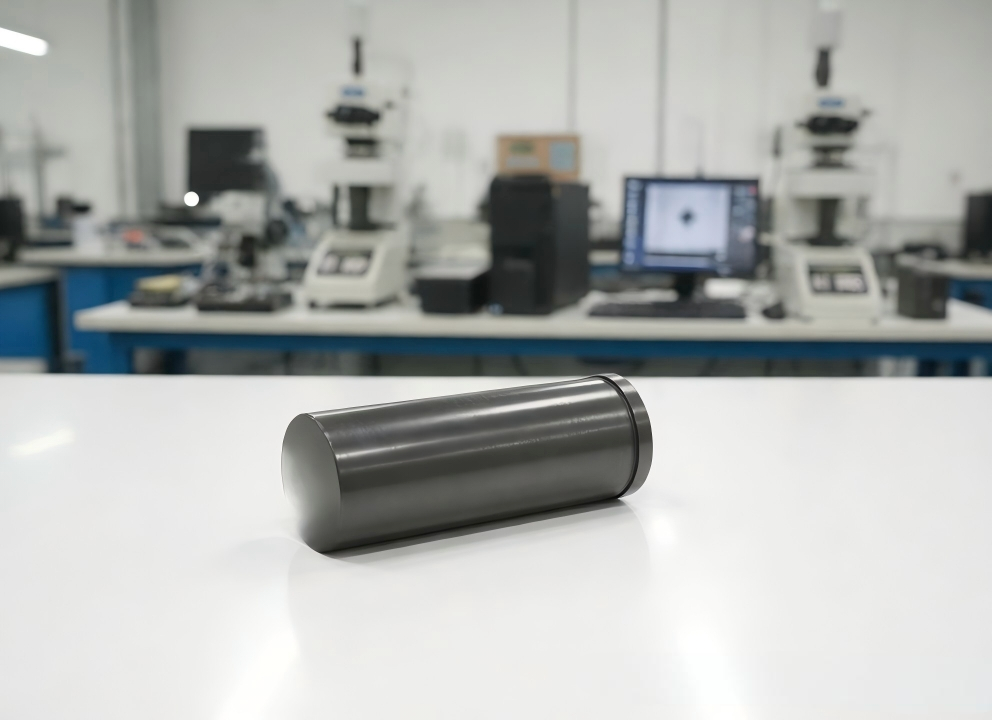
Quartz Tubes in PV Diffusion Furnaces Keep Failing and Yield Won’t Stabilize—Can Silicon Carbide Ceramic Tubes Solve It?

In PERC/TOPCon solar cell sintering lines and 12-inch semiconductor diffusion furnaces, the furnace tube may look like just a chamber component, but it directly governs doping uniformity, wafer breakage rate, and how often you stop the line to swap tubes. As downstream capacity expanded rapidly over the past two years, quartz’s old problems—softening and sagging […]
Quartz Tubes in PV Diffusion Furnaces Keep Failing and Yield Won’t Stabilize—Can Silicon Carbide Ceramic Tubes Solve It? Read More »

Ceramic Bearings: The Complete Guide to High-Performance Advanced Ceramics

What Are Ceramic Bearings? Ceramic bearings are high-performance components made from advanced ceramics such as silicon nitride (Si₃N₄) and zirconia (ZrO₂). Compared to traditional steel bearings, they offer superior strength, reduced friction, and exceptional resistance to heat, wear, and corrosion. These properties make ceramic ball bearings a preferred choice in industries that demand precision, durability,

Ceramic Bearings: The Complete Guide to High-Performance Advanced Ceramics Read More »

Roller Changes Too Frequent on Solar & Battery Lines? Can Silicon Nitride Ceramic Rollers Survive High-Temperature Wear?

Maintenance engineers on production lines have likely felt it in recent years: metal rollers are increasingly “struggling” in solar cell sintering, battery coating, and high-speed wire rod finishing positions. Once temperatures exceed 600°C, the material begins to soften and deform, and metal ions leach into the product. As the frequency of roller changes rises, the

Roller Changes Too Frequent on Solar & Battery Lines? Can Silicon Nitride Ceramic Rollers Survive High-Temperature Wear? Read More »

Always Chipping When Drilling Holes in AlN Substrates for IGBT/SiC Modules? Quantifying Operating Conditions Is the Key to Making the Right Selection

Engineers designing thermal management for power modules have likely noticed recently that as SiC and IGBT devices push higher voltages and currents, the substrate’s heat dissipation becomes the bottleneck. Aluminum nitride (AlN) ceramics—with a thermal conductivity of 170–230 W/(m·K), a CTE of 4.5×10⁻⁶/K matching silicon, and electrical insulation—should be the star student on paper. But

Always Chipping When Drilling Holes in AlN Substrates for IGBT/SiC Modules? Quantifying Operating Conditions Is the Key to Making the Right Selection Read More »

Pressureless Sintered Silicon Carbide: When Tungsten Carbide Meets 400°C+ Acid, Why Pressureless Sintered Silicon Carbide Doesn’t Flinch

Most engineers who do production line maintenance share a common experience: those seal rings, rollers, and wear liners stamped “tungsten carbide/cemented carbide” hold up reasonably well under pure abrasive wear. But once the operating conditions escalate into that triple threat of high temperature, corrosion, and particle-laden erosion, the service life becomes unpredictable. The cobalt binder

Pressureless Sintered Silicon Carbide: When Tungsten Carbide Meets 400°C+ Acid, Why Pressureless Sintered Silicon Carbide Doesn’t Flinch Read More »

Are Silicon Carbide Grounding Clamps Worth Switching To? A Practical Assessment from Technical Specs to Scenario-Based Selection

If you work in power grounding components, you’ve probably been asked this a lot lately: traditional galvanized steel clamps work just fine—why switch to silicon carbide ceramic ones? Honestly, not every scenario calls for a change. But there are a few operating conditions—coastal wind farm tower foundations, substations in chemical industrial zones, and high-speed rail

Are Silicon Carbide Grounding Clamps Worth Switching To? A Practical Assessment from Technical Specs to Scenario-Based Selection Read More »

How to Choose High-Temperature Kiln Rollers Without Getting Burned—From Specifications to Scenarios, Here’s a Clear Walkthrough

When a roller bends in a roller hearth kiln, the entire line has to stop. In the past couple of years, as new energy kilns have multiplied, the clients coming to us about silicon carbide rollers aren’t asking “how much per piece” anymore. Their biggest question is: “Will the deflection exceed tolerance after six months

How to Choose High-Temperature Kiln Rollers Without Getting Burned—From Specifications to Scenarios, Here’s a Clear Walkthrough Read More »

Tungsten Carbide Can’t Handle High-Temperature Corrosion? Pressureless silicon carbide ceramics can replace tungsten steel

Most engineers handling production line maintenance or equipment selection have had this experience: a wear part stamped “tungsten carbide/cemented carbide” looks great on the hardness spec sheet, but once it enters a composite environment of high temperature, corrosion, and particle-laden erosion, its service life simply won’t hold up, and replacements become increasingly frequent. The problem

Tungsten Carbide Can’t Handle High-Temperature Corrosion? Pressureless silicon carbide ceramics can replace tungsten steel Read More »

Frequent Tungsten Carbide Replacements Burning Through Your Budget? Here’s What Pressureless Sintered Silicon Carbide Delivers in Real-World Tests.

If you’ve worked in continuous casting for metallurgy, mine slurry transport, or chemical pump valves, you’re no stranger to tungsten carbide’s Achilles’ heel—its hardness holds up at room temperature, and the grade is right on paper, but it starts to falter under combined service conditions. As temperatures rise, the cobalt binder phase softens first; in

Frequent Tungsten Carbide Replacements Burning Through Your Budget? Here’s What Pressureless Sintered Silicon Carbide Delivers in Real-World Tests. Read More »

Under High-Temperature and High-Frequency Conditions, How Do Silicon Nitride Ceramic Sheets Resolve the Conflict Between Insulation and Heat Dissipation?

When it comes to heat dissipation and insulation in electronic devices, many people’s first thought might be alumina or zirconia. However, under certain extreme operating conditions—such as IGBT modules in electric vehicles, high-frequency transformers in photovoltaic inverters, or even power amplifiers in 5G base stations—the shortcomings of traditional materials become apparent. In these situations, silicon

Under High-Temperature and High-Frequency Conditions, How Do Silicon Nitride Ceramic Sheets Resolve the Conflict Between Insulation and Heat Dissipation? Read More »