
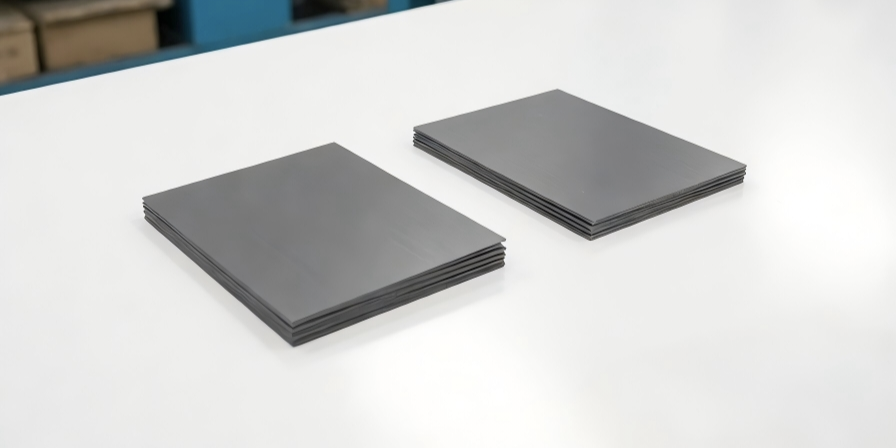
When it comes to heat dissipation and insulation in electronic devices, many people’s first thought might be alumina or zirconia. However, under certain extreme operating conditions—such as IGBT modules in electric vehicles, high-frequency transformers in photovoltaic inverters, or even power amplifiers in 5G base stations—the shortcomings of traditional materials become apparent. In these situations, silicon nitride (Si₃N₄) insulating ceramic sheets emerge as a more reliable choice. Simply put, they are the “special forces” that can withstand thermal shock while ensuring no electrical leakage in the “three highs” environment of high temperature, high voltage, and high frequency.

I. Real Performance Under Quantified Metrics: More Than Just “Feels Good”
Let’s first look at a specific set of operating parameters. Consider a motor controller in a new energy vehicle, operating long-term at a junction temperature around 150°C, with a switching frequency of 20 kHz, and frequently experiencing temperature cycles from -40°C to 125°C. Under these conditions, the insulation resistance of a standard alumina substrate would noticeably decline, and its thermal fatigue life might only be a few thousand cycles. However, according to actual testing, under the same conditions, the thermal conductivity of a silicon nitride ceramic sheet remains consistently above 80 W/(m·K)—more than three times that of alumina. Its dielectric strength exceeds 20 kV/mm, nearly double that of alumina. More importantly, after enduring 5,000 thermal shock cycles, its insulation performance degrades by less than 5%.
These figures are not results from an idealized laboratory setting; they come from batch validation conducted for a top-tier Tier 1 supplier. In essence, silicon nitride indeed possesses solid fundamentals when dealing with the coupled effects of “thermal, electrical, and mechanical” stresses. Of course, slight variations may exist between batches and processes, but overall, the reliability of this material under harsh conditions has been repeatedly certified by third-party testing agencies.
II. From Microstructure to Macro-Process: Why Can It Achieve This?
The resilience of silicon nitride is firstly attributed to its crystal structure. Its lattice is formed by covalent bonds with high bonding energy, granting it high-temperature resistance and oxidation resistance. Furthermore, its coefficient of thermal expansion (CTE) of approximately 3.0 × 10⁻⁶/K is very close to that of silicon chips. This is particularly critical because a smaller thermal mismatch makes the solder layer less prone to cracking. In contrast, alumina has a relatively high CTE, making it susceptible to stress concentration during repeated heating and cooling cycles.
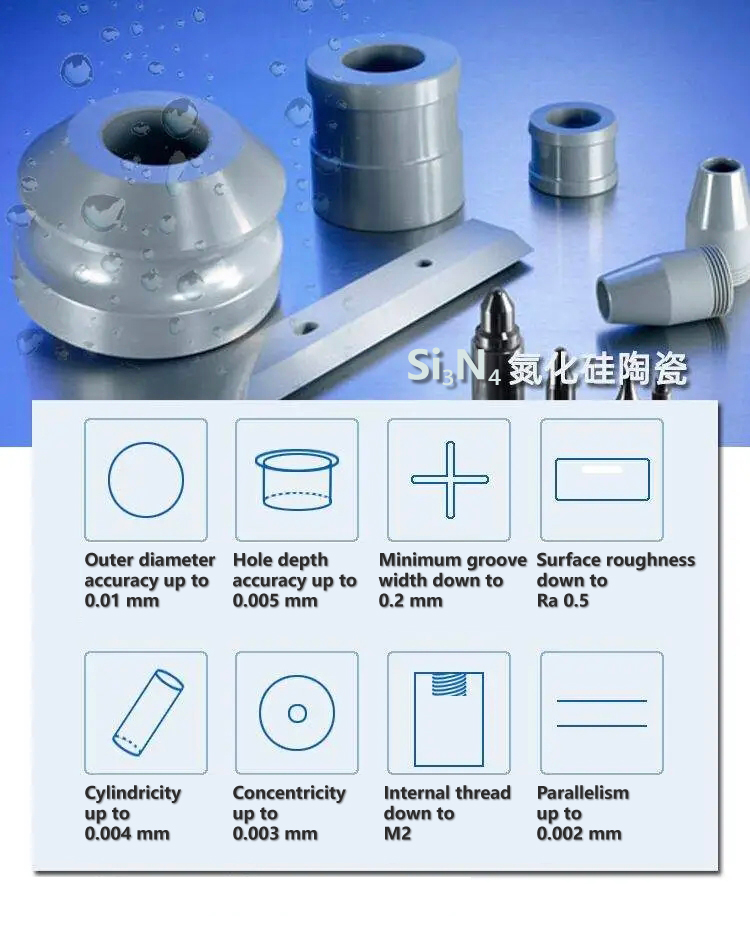
Regarding manufacturing processes, mainstream silicon nitride ceramic sheets currently utilize gas pressure sintering or hot pressing sintering. By adding small amounts of sintering aids (such as yttrium oxide and aluminum oxide), a dense structure is formed at temperatures exceeding 1700°C. This process imposes extremely high requirements on powder purity, particle size distribution, and sintering profile control. Frankly speaking, there are not many domestic manufacturers capable of doing this well, but Shenzhen Xinluo Technology Co., Ltd. has accumulated considerable practical experience in this area. They employ a modified tape casting plus multi-layer co-firing approach, capable of controlling thickness tolerance within ±0.02 mm and achieving a surface roughness of Ra ≤ 0.1 μm. This significantly improves yield for subsequent metallization coating processes.
III. Market Trends and Application Cases: Not “Whether It Can Be Used,” But “When to Use It”
From a global market perspective, the demand for silicon nitride ceramic substrates is rising rapidly. According to industry research forecasts, by 2028, the demand for silicon nitride substrates in the new energy vehicle sector will account for over 45% of the total, with a compound annual growth rate exceeding 12%. The driving force behind this is straightforward: after the widespread adoption of 800V high-voltage platforms, higher requirements are placed on the voltage withstand rating and heat dissipation efficiency of insulating materials, and silicon nitride precisely meets both needs.
Here is a specific example. A domestic energy storage system integrator previously used alumina substrates as insulating pads for DC-DC converters. However, they later discovered that under prolonged full-load operation, local hotspot temperatures exceeded 130°C, causing micro-cracks in the alumina substrate and leading to insulation failure. After switching to silicon nitride ceramic sheets, continuous operation under the same conditions for 3,000 hours showed no abnormalities. More importantly, because of silicon nitride’s superior thermal conductivity, the heatsink size was reduced by 15%, resulting in an overall decrease in system cost.
IV. Delivery Reliability and Technical Support: More Than Just Selling a Product
Ultimately, no matter how good a material is, if supply is unstable and technical support is inadequate, customers will hesitate to switch. The approach taken by Shenzhen Xinluo Technology Co., Ltd. is to provide customized sample validation services for each new project. Based on the customer’s operating parameters—such as working temperature range, mounting stress levels, and potential exposure to corrosive media—they adjust the formulation and sintering process. For example, for customers operating in acidic gas environments, they optimize the grain boundary phase composition to enhance corrosion resistance.
Furthermore, during the batch delivery phase, they have implemented fully automated visual inspection and ultrasonic scanning equipment. Every ceramic sheet passes through three checkpoints: porosity, warpage, and surface defects. Before shipment, a detailed inspection report is attached, covering key indicators such as thermal conductivity, dielectric strength, and coefficient of thermal expansion. This allows customers to use the components directly upon receipt, eliminating the hassle of secondary screening.
Final Thoughts
Looking back, the value of silicon nitride insulating ceramic sheets lies not in how “advanced” they are, but in their ability to solve real-world problems in specific scenarios. As the demand for high-performance insulating materials continues to intensify in fields such as new energy, power electronics, and RF communications, the application boundaries of silicon nitride will keep expanding. For engineers, when selecting materials, it is worth asking one more question: “What does my operating condition truly require?” Sometimes, the answer lies in materials that may seem unremarkable but have proven themselves through rigorous testing.
About Xinluo Ceramic:
Shenzhen Xinluo Technology Co., Ltd. (Xinluo) specialises in researching and developing all kinds of ceramic components, including Zirconia, Alumina, AlN, SiC, Si3N4 and mixed powder, as well as manufacturing. With an extensive selection of advanced ceramic materials and precision machining capabilities, we can deliver customised components with speed and accuracy. Depending on the application, Xinluo can help provide solutions for different materials.
Product Information: https://xinluoceramic.com/product-tag/silicon-nitride/
