
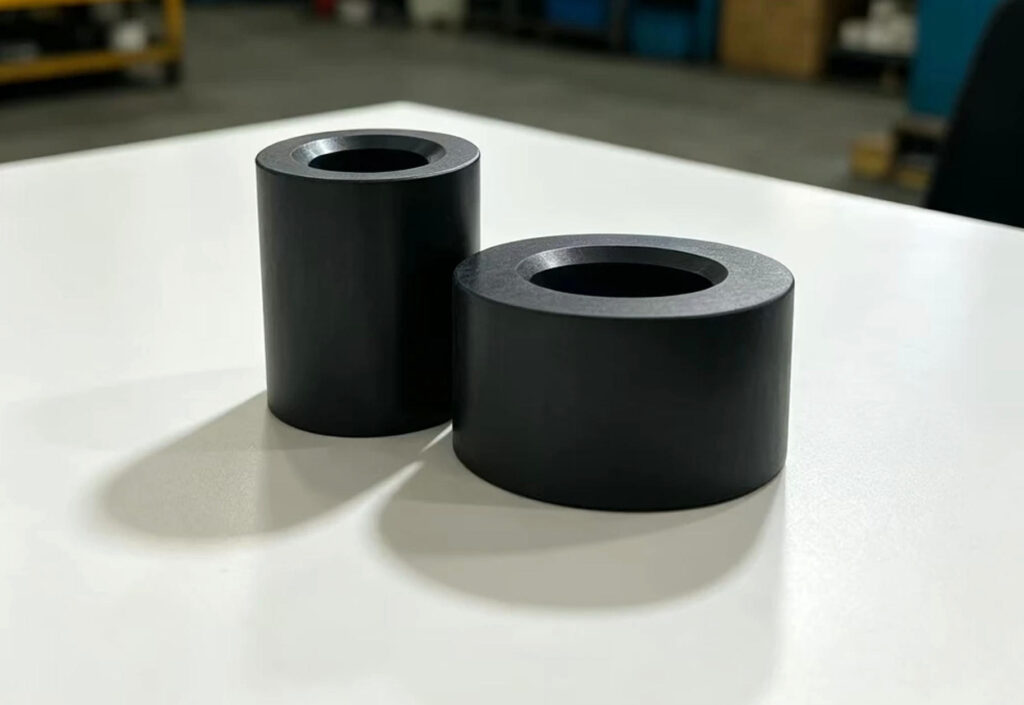
Most engineers handling production line maintenance or equipment selection have had this experience: a wear part stamped “tungsten carbide/cemented carbide” looks great on the hardness spec sheet, but once it enters a composite environment of high temperature, corrosion, and particle-laden erosion, its service life simply won’t hold up, and replacements become increasingly frequent. The problem often lies not in operations, but in tungsten carbide’s own ceiling—the cobalt binder phase begins softening above 400°C and gets selectively dissolved in acidic media. It’s a “slowly dragged down” type of failure.
In the past couple of years, pressureless sintered silicon carbide (SSiC) has repeatedly been brought up as a benchmark against tungsten carbide. This isn’t marketing talk—it’s the operating data driving the conversation. Below, we’ll unpack the indicators, validation, positioning, scenarios, and market trends layer by layer, to see how this substitution math really adds up.
I. Technical Indicators: Put the Hard Numbers on the Table First
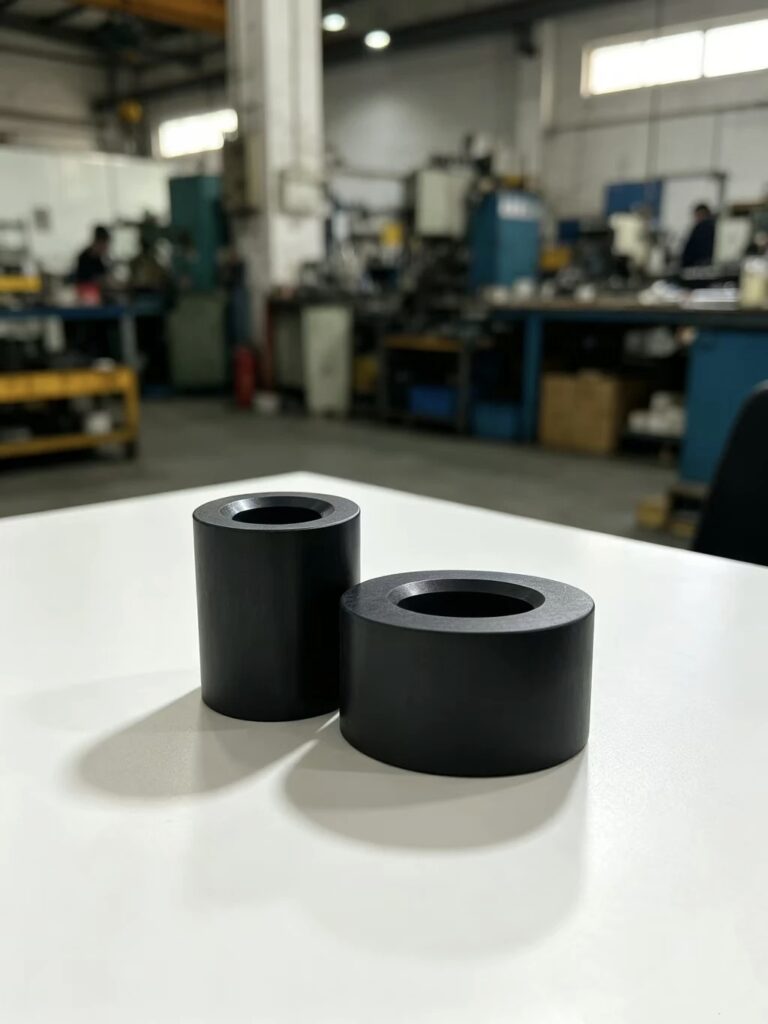
Whether a substitution is viable depends first on quantifiable benchmarks (using common industry ranges):
- Density: SSiC is approximately 3.10–3.20 g/cm³; tungsten carbide is 14–15 g/cm³. The former is only about 40% of the latter. For rotating parts like mechanical seal rings, guide rollers, and rotary bushings, inertial loads drop by a full tier, and edge stresses during start-stop cycles are much friendlier.
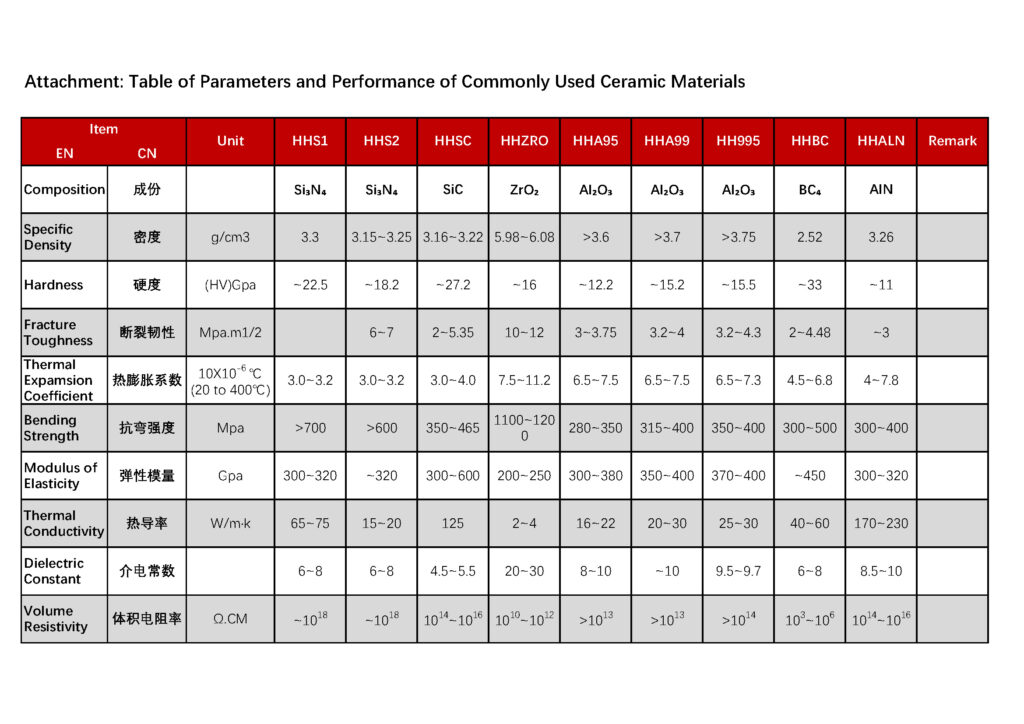
- Hardness: SSiC has a Vickers hardness of 2200–2800 HV; tungsten carbide ranges from 1200–2000 HV. Its Mohs hardness reaches 9.2–9.5.
- High-Temperature Retention: The cobalt phase in tungsten carbide softens above 400°C and drops off a cliff at 600°C. SSiC maintains a flexural strength of 370–420 MPa even at 1200°C—nearly identical to its room-temperature performance.
- Thermal Conductivity and Expansion: SSiC has a thermal conductivity of approximately 90–150 W/(m·K) and a thermal expansion coefficient of 4.0–4.5 × 10⁻⁶/K—one-third lower than tungsten carbide. Fit clearances are less prone to drift during thermal cycling.
- Corrosion: SSiC is nearly chemically inert, remaining stable across a wide pH range (except extreme combinations like HF with high-temperature alkalis). Tungsten carbide’s cobalt phase suffers “pitting-type” spalling in acids and bases.
To be honest, we also need to lay out the shortcomings: SSiC’s fracture toughness is on the order of 3.5–4.5 MPa·m¹/², while tungsten carbide can exceed 10. In scenarios involving severe impact, heavy hammering, or repeated large shear forces, ceramics do not hold an advantage. The logic of substitution is “operating condition segmentation,” not universal replacement.
II. Market Validation: Several Scenarios Already Running in Production
No matter how impressive lab data looks, it needs the nod from the production line. Here are a few representative replacement track records:
- Metallurgy Wire Rod: Steel tube pinch rolls originally needed replacement every 2–3 weeks; switching to SSiC extends this to 6 months. High-speed wire rod mill guide rollers handle a starting throughput of 3000 tons, achieving 2–3 times the lifespan of tungsten carbide.
- Petrochemical/Mechanical Seals: High-speed pump seal rings in solid-particle-laden and corrosive media achieve 5–8 times the composite service life of tungsten carbide solutions. Downtime frequency drops, and within two replacement cycles, a 30%–40% reduction in TCO is observable.
- Semiconductor/Photovoltaics: Components like etching chamber showerheads and wafer boats—originally with tungsten carbide liners replaced every 3–6 months—last several times longer or even over two years after switching to SSiC. This also resolves purity issues related to metal ion contamination.
The common thread across these scenarios is a combination of “wear + corrosion + heat,” or the requirement for lightweighting plus thermal stability—precisely the zones where SSiC’s comprehensive advantages shine.
III. Product Positioning, Pros/Cons, and How to Lock in the Right Scenarios
It would be wrong to position SSiC as a “full upgrade to tungsten carbide.” A more accurate description is that it fills a gap beyond the boundaries of tungsten carbide’s performance.
Its strengths cluster around “three highs, one long, one light”—high hardness for wear resistance, high chemical stability, high-temperature strength that doesn’t collapse, long service life, and low density. Its limitations are intrinsic brittleness, inferior impact resistance compared to tungsten carbide, and a first-piece procurement cost typically higher than tungsten carbide. When selecting materials, don’t just look at unit price—look at TCO: longer replacement cycles, fewer shutdowns, and lower maintenance generally recover the initial price differential within 1–2 replacement cycles.
Prioritize these four categories of scenarios:
- High-temperature wear positions (kiln rollers, welding support bars, >400°C conveyor rollers)
- Corrosive media positions (chemical pump valve flow-wetted parts, semiconductor wet chambers, electroplating drums)
- High PV seals/bearings (mechanical seal rings, sliding bearings, wire rod guides)
- Lightweight high-speed parts (high-speed spindles, turbine components—leveraging low density to reduce centrifugal loads)
IV. Market Trends and Future Layout
Data speaks louder than slogans. In 2025, the global silicon carbide structural ceramics market stands at approximately RMB 9.464 billion, projected to reach RMB 16.52 billion by 2032, with a CAGR of 8.4%. Within this, the pressureless sintered segment is valued at approximately $2.444 billion in 2025, expected to reach $4.497 billion by 2032, with a CAGR of 8.9%—significantly faster than reaction-bonded SiC’s 5.1%. The primary drivers are semiconductors, photovoltaics, and new energy.
Overseas players like Saint-Gobain, CoorsTek, and Kyocera hold top positions, but the global top five collectively command only a 23% market share. This is not a winner-takes-all market—technological specialization determines survival, presenting a window of opportunity for domestic manufacturers. On the flip side, for tungsten carbide, volatility in cobalt resource prices combined with environmental pressures from heavy metal pollution during production continue to erode its cost advantage.
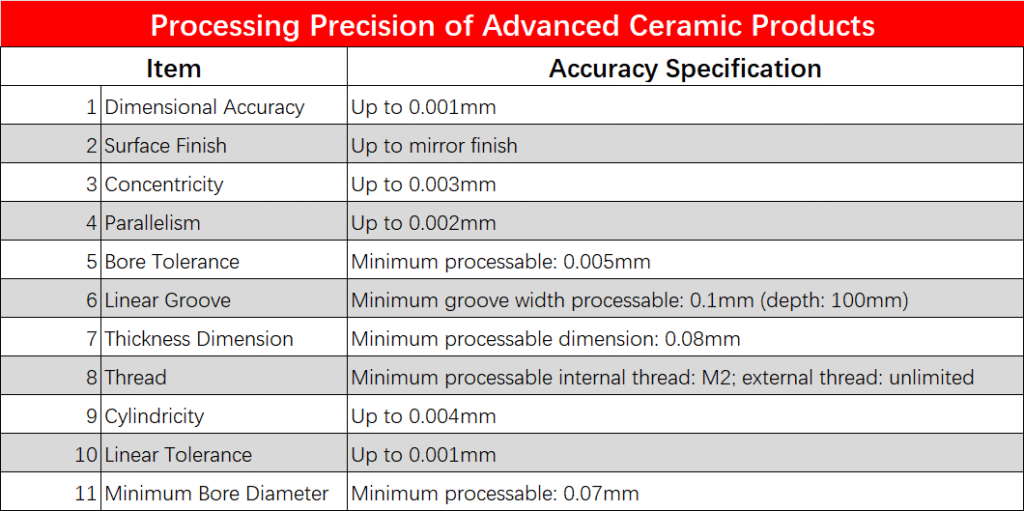
Domestically, the pace of localization is accelerating. Companies like Shenzhen Xinluo Technology Co., Ltd. employ cold isostatic pressing combined with optimized sintering curves, achieving densities around 98% of theoretical density. They then apply five-axis CNC precision machining, maintaining tolerances of ±0.01 mm and surface finishes of Ra 0.2–0.4 μm. Their delivery chain for complex-shaped parts like impellers, seal rings, and nozzles is already proven, standing shoulder to shoulder with international standards.
Returning to the beginning—substitution is never about wholesale replacement, but about breaking down operating conditions. Whenever tungsten carbide’s weaknesses (high-temperature softening, cobalt phase corrosion, excessive density) happen to hit the pain points on your production line, it’s worth running the numbers on shifting your mindset from “harder tungsten carbide” to SSiC’s “more inert, better thermal shock resistance, lighter weight.” The essence of material selection is putting the right performance in the right operating condition—not chasing a label of “strongest.”
About Xinluo Ceramic:
Xinluo Technology Co., Ltd. (Xinluo) specialises in researching and developing all kinds of ceramic components, including Zirconia, Alumina, AlN, SiC, Si3N4 and mixed powder, as well as manufacturing. With an extensive selection of advanced ceramic materials and precision machining capabilities, we can deliver customised components with speed and accuracy. Depending on the application, Xinluo can help provide solutions for different materials.
Product Information: https://xinluoceramic.com/product-tag/silicon-carbide/
