
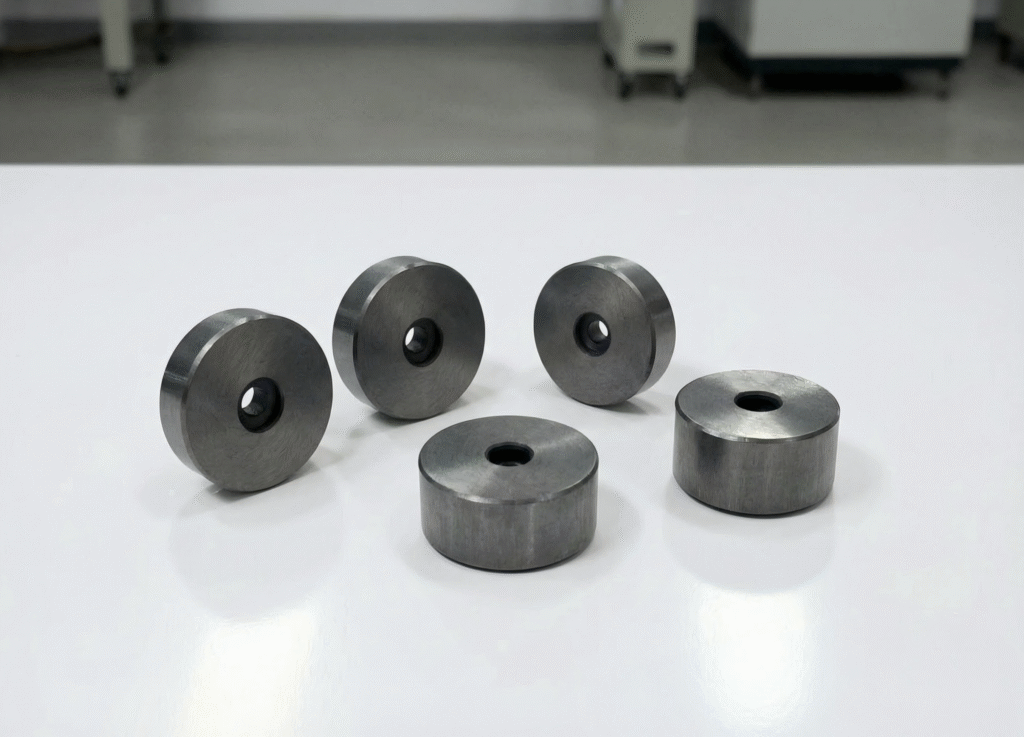
If you’ve worked in continuous casting for metallurgy, mine slurry transport, or chemical pump valves, you’re no stranger to tungsten carbide’s Achilles’ heel—its hardness holds up at room temperature, and the grade is right on paper, but it starts to falter under combined service conditions. As temperatures rise, the cobalt binder phase softens first; in acidic or alkaline environments, the cobalt selectively leaches out, causing the hard phase to spall off, eventually forcing a shutdown for replacement. In recent years, many plants have been testing an alternative: using pressureless sintered silicon carbide (SSiC) to replace some tungsten carbide components. Is this just hype? Let’s break down the numbers.

I. First, Let’s Compare the Operating Parameters Head-to-Head
Whether a substitution works depends entirely on where your failure mode falls. Here’s how tungsten carbide and pressureless SiC stack up across key dimensions:
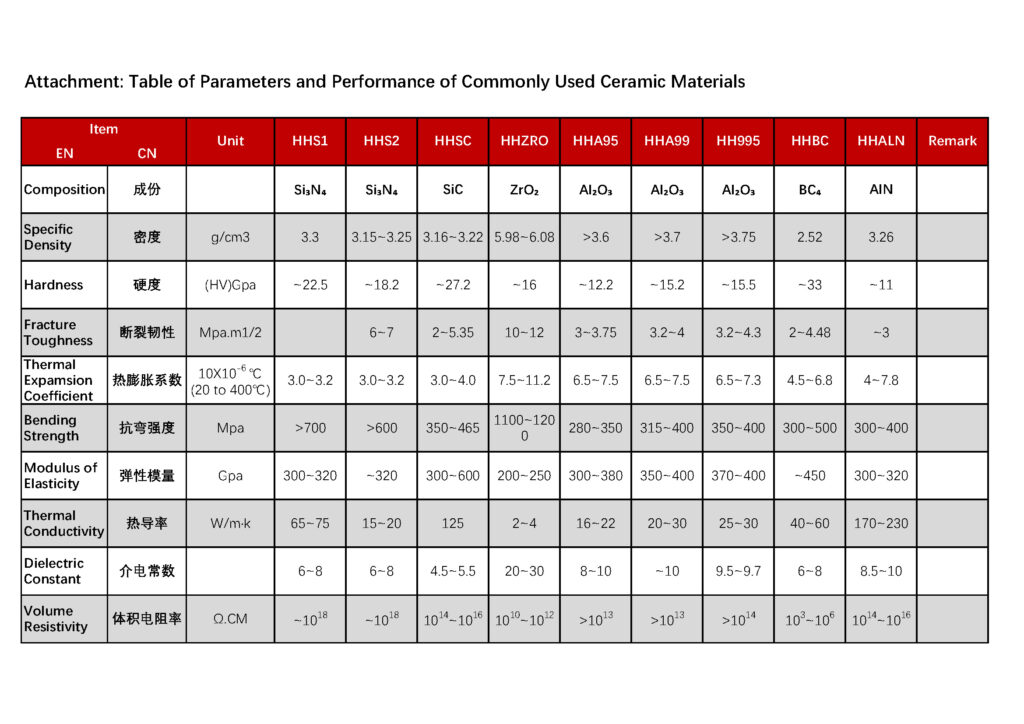
- Temperature Limits: The cobalt phase in tungsten carbide begins softening above 400°C, with performance dropping off a cliff beyond 600°C. SSiC, held together by strong Si-C covalent bonds, maintains a flexural strength of 370–420 MPa even at 1200°C—nearly identical to its room-temperature performance.
- Stress and Hardness: SSiC has a Vickers hardness of 2200–2800 HV and a Mohs hardness of 9.2–9.5; tungsten carbide ranges from 1200–2000 HV. The density contrast is even more striking—SSiC sits at about 3.15 g/cm³, only 40% of tungsten carbide’s 14–15 g/cm³, directly reducing inertial loads on rotating parts.
- Media Resistance: SSiC possesses inherent chemical inertness, remaining stable across a wide pH range, with annual corrosion rates below 0.1 mm in chloride and sulfur-containing environments. Tungsten carbide, on the other hand, follows a “binder phase eaten away first, then hard phase crumbles” degradation path in acidic and saline media.
- Thermal Cycling: SSiC has a thermal expansion coefficient of 4.0–4.4 × 10⁻⁶/K—about one-third that of metals—and a thermal conductivity of 90–150 W/(m·K). This means fit clearances are less prone to drift during thermal cycles.
That said, we must acknowledge the downsides: SSiC’s fracture toughness is 3.5–4.5 MPa·m¹/², while tungsten carbide can exceed 10. Ceramics don’t hold an advantage in scenarios involving severe impact, heavy shear, or hammering. The logic behind substitution is “operating condition segmentation,” not universal replacement.
II. Real-World Data Speaks Louder Than Paper Specs
Based on installation feedback over the past few years from Shenzhen Xinluo Technology Co., Ltd., several figures stand out:
- For mine slurry transport containing hard particles, tungsten carbide rollers typically fail after 3000–8000 hours. SSiC rollers have recorded continuous operation exceeding 30,000 hours, with wear volume reduced to roughly 15% of the original solution.
- On steel tube production line pinch rolls, which previously needed replacement every 2–3 weeks, SSiC rolls last 6 months.
- In finishing mill guides and pulleys under equivalent abrasive conditions, SSiC rollers achieve 3–5 times the lifespan of tungsten carbide. At 800°C, their dry friction volumetric wear rate is below 5 mm³/N·m—3–5 times lower than tungsten carbide.
- For mechanical seal rings in chemical pumps and valves, SSiC solutions deliver 5–8 times the service life of tungsten carbide. Over a two-year cycle, total operating costs (including downtime, labor, and spare parts) decrease by 30%–40%.
The common thread across these scenarios: they combine wear, corrosion, and heat—or require lightweighting plus thermal stability—precisely the zones where SSiC’s comprehensive advantages shine.
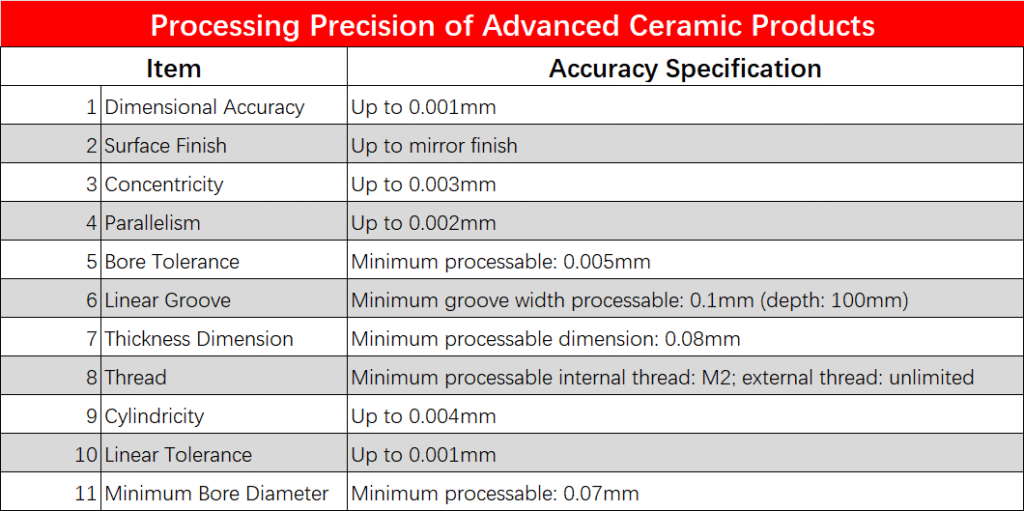
III. Why Choose the “Pressureless Sintering” Route?
Several processes exist for making SiC—reaction bonding, hot pressing, and hot isostatic pressing all work—but pressureless sintering (atmospheric sintering) offers a very practical engineering benefit:
Using high-purity, ultra-fine SiC powder with boron/carbon additives, fired at 1950–2100°C in an inert atmosphere without applied pressure, densities can reach over 98% of theoretical value, with SiC purity of 98–99.5% and virtually no free silicon.
Compared to hot pressing, pressureless sintering requires simpler equipment, consumes 30–50% less energy, and can produce complex shapes. It’s compatible with multiple forming methods—extrusion, die pressing, cold isostatic pressing—making batch delivery of structural parts (seal rings, bearing bushings, wear-resistant inserts) cost-controllable. This is precisely why SSiC has been rapidly adopted in chemical pump valves, semiconductor etching, and lithium battery calendering.
Shenzhen Xinluo Technology Co., Ltd.’s approach runs from high-purity α-SiC powder selection through near-net shaping, atmospheric sintering, and precision grinding—turning “material properties” into “parts ready to install and run.” This step matters most to users because if you can’t put it into service, impressive specs are worthless.
IV. Market Trend: Moving from Pilot Testing to Standard Adoption
In 2025, the global silicon carbide ceramics market was approximately $6.4 billion, projected to exceed $10 billion by 2031, with a CAGR of 7–8%. China’s share accounts for over RMB 20 billion, with the pressureless sintered SiC segment growing at a CAGR of 8.2%—faster than reaction-bonded SiC’s 5.1%. Key drivers are demand for long-life components in semiconductors, photovoltaics, new energy, and chemical/metallurgical industries.
Meanwhile, on the tungsten carbide side, volatility in cobalt resource prices combined with environmental pressures from heavy metal pollution during production continue to erode its cost advantage. Overseas leaders include Saint-Gobain, CoorsTek, and Kyocera, but the top five globally hold only 23% combined market share—this isn’t a winner-takes-all market. Technological specialization determines survival, presenting a window of opportunity for domestic manufacturers.
V. Selection Advice: Don’t Take a One-Size-Fits-All Approach
Replacement is never about swapping “all tungsten carbide for SiC.” Instead, segment your operating conditions:
- If your failure mode involves “corrosion + gradual wear leading to leakage/vibration”—rather than “a single high-energy impact shattering the part”—these positions merit shifting your thinking from “harder tungsten carbide” to SSiC’s “more inert, better thermal shock resistance, lighter weight.”
- For purely impact-dominated, heavy shear, or toughness-critical applications, tungsten carbide remains reliable—don’t force ceramic adoption.
- When calculating costs, don’t look only at unit price—consider TCO. Longer replacement cycles, fewer shutdowns, and lower maintenance typically recover SSiC’s initial price premium within 1–2 replacement cycles.
If your production line is stuck on the painful dilemma of “tungsten carbide parts wearing out too fast, burning money on downtime,” try selecting one position for a sample installation. Let your own plant’s real-world operating hours make the final call. When it comes to material selection, let the data speak.
About Xinluo Ceramic:
Xinluo Technology Co., Ltd. (Xinluo) specialises in researching and developing all kinds of ceramic components, including Zirconia, Alumina, AlN, SiC, Si3N4 and mixed powder, as well as manufacturing. With an extensive selection of advanced ceramic materials and precision machining capabilities, we can deliver customised components with speed and accuracy. Depending on the application, Xinluo can help provide solutions for different materials.
Product Information: https://xinluoceramic.com/product-tag/silicon-carbide/
