
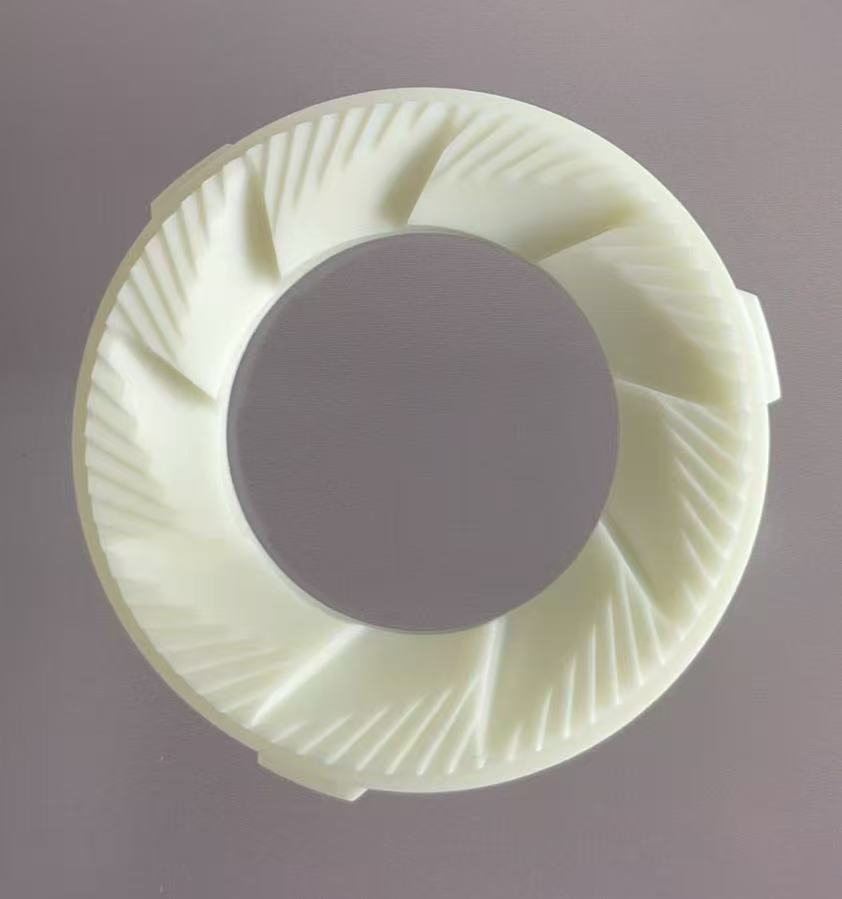
Why Advanced Ceramics Matter in Precision Grinding
Coffee grinder burrs are one of the most important components in determining grinding consistency, particle size distribution, heat generation, and ultimately coffee extraction quality.
While metal burrs are widely used in commercial and high-performance coffee grinders, ceramic coffee grinder burrs have become an important solution for applications requiring high hardness, wear resistance, dimensional stability, and controlled grinding performance.
Among advanced ceramic materials, alumina ceramic (aluminum oxide, Al₂O₃) is particularly suitable for ceramic grinder burr applications because of its combination of hardness, wear resistance, chemical stability, and cost-effectiveness.
For manufacturers and equipment designers, the key question is not simply whether ceramic is better than metal. Instead, the focus should be on which advanced ceramic material, burr geometry, manufacturing process, and dimensional tolerances are appropriate for the intended grinding application.
Quick Answer: What Are Ceramic Coffee Grinder Burrs?
Ceramic coffee grinder burrs are precision grinding components manufactured from engineered ceramic materials, commonly alumina ceramic, and designed to grind coffee beans between two opposing burr surfaces.
Compared with conventional metal burrs, advanced ceramic burrs can offer:
- High hardness
- Excellent wear resistance
- Good chemical and corrosion resistance
- Low thermal conductivity
- Good dimensional stability
- Long service life in appropriate operating conditions
- Consistent performance when manufactured with precise burr geometry
The performance of a ceramic coffee grinder burr depends not only on the ceramic material but also on its tooth geometry, surface finish, dimensional accuracy, concentricity, and manufacturing quality.
1. What Is a Coffee Grinder Burr?
A burr is the grinding element inside a burr coffee grinder.
Unlike blade grinders, which cut and randomly break coffee beans with a rotating blade, burr grinders use two precisely shaped grinding surfaces. Coffee beans pass through the gap between these surfaces and are progressively crushed and ground into smaller particles.
The burr geometry and material influence:
- Particle size distribution
- Grinding consistency
- Grinding speed
- Heat generation
- Burr wear
- Grinder service life
- Coffee extraction characteristics
This makes the burr a precision functional component, rather than simply a consumable grinding part.
2. Why Does Burr Material Matter?
The material of a coffee grinder burr directly affects its mechanical and thermal behavior during grinding.
During operation, the burr surfaces experience repeated contact with coffee beans and continuous friction. Over time, the grinding teeth are exposed to mechanical stress and abrasive wear.
Therefore, an ideal burr material should provide a balance of:
High Hardness
High hardness helps the grinding teeth maintain their designed geometry during repeated operation.
Wear Resistance
Wear resistance is important because changes in tooth geometry can influence the way coffee beans are fractured and ground.
Dimensional Stability
Precision grinding requires the burr surfaces to maintain their designed dimensions and alignment over time.
Thermal Characteristics
The thermal properties of the burr material influence heat transfer during grinding. This is particularly relevant for grinders operating continuously or at high rotational speeds.
Chemical Stability
A grinding component may come into contact with coffee oils, moisture, and cleaning agents. Good chemical stability can contribute to long-term component reliability.
These requirements explain why advanced ceramics are attractive for precision grinding applications.
3. What Are Advanced Ceramic Coffee Grinder Burrs?
Advanced ceramic coffee grinder burrs are burr components manufactured from engineered ceramic materials whose properties are controlled through material formulation and precision manufacturing processes.
Unlike traditional ceramics used primarily for decorative or structural applications, advanced ceramics are engineered for specific mechanical, thermal, electrical, or chemical properties.
For coffee grinder burrs, the most relevant properties include:
- Hardness
- Wear resistance
- Fracture behavior
- Thermal conductivity
- Chemical stability
- Dimensional stability
- Surface finish
- Machinability before and after sintering
This is why the term advanced ceramic burr is more technically meaningful than simply referring to a component as a “ceramic burr.”
4. Why Is Alumina Used for Ceramic Coffee Grinder Burrs?
For many ceramic coffee grinder burr applications, alumina (Al₂O₃), also known as aluminum oxide, is a highly suitable advanced ceramic material.
Alumina is one of the most widely used engineering ceramics because it provides a useful combination of performance, availability, and manufacturing flexibility.
4.1 High Hardness
Alumina ceramic has significantly higher hardness than many conventional engineering materials.
For a grinding burr, high hardness helps the cutting and grinding teeth maintain their designed profiles during repeated grinding cycles.
4.2 Excellent Wear Resistance
Coffee beans create repeated abrasive and mechanical loading on the burr surface.
The wear resistance of alumina ceramic makes it suitable for applications where maintaining grinding geometry over extended use is important.
4.3 Good Chemical Stability
Alumina provides good chemical stability in many common operating environments.
This characteristic is useful for coffee grinder components that may be exposed to coffee oils, moisture, and cleaning processes.
4.4 Low Thermal Conductivity Compared with Many Metals
Ceramic materials generally have lower thermal conductivity than many metals.
For coffee grinding applications, this can influence how heat generated by friction is transferred through the burr structure.
However, actual grinding temperature depends on many factors, including rotational speed, bean characteristics, feed rate, burr geometry, grinder design, and operating conditions.
4.5 Dimensional Stability
Precision ceramic components can maintain stable dimensions under appropriate operating conditions.
For grinder burrs, dimensional stability is particularly important because even relatively small changes in the grinding surface geometry can affect the resulting particle distribution.
5. Advanced Ceramic vs. Metal Coffee Grinder Burrs
The comparison between ceramic and metal burrs should be based on the requirements of the specific grinder rather than assuming that one material is universally better.
| Property | Advanced Ceramic Burr | Metal Burr |
|---|---|---|
| Hardness | Very high | Depends on alloy and heat treatment |
| Wear resistance | Excellent | Good to excellent depending on material |
| Thermal conductivity | Generally lower | Generally higher |
| Corrosion resistance | Generally excellent | Depends on metal/alloy |
| Dimensional stability | Excellent under suitable conditions | Good, but affected by thermal behavior |
| Material processing | Requires ceramic forming and precision finishing | Established metal machining processes |
| Brittleness | Higher than metals | Generally more ductile |
| Design flexibility | Depends on ceramic forming and geometry | Generally high |
| Typical applications | Consumer grinders, specialized grinding components, precision applications | Consumer, commercial, industrial grinders |
The key advantage of advanced ceramics is therefore not simply “ceramic is better.”
Rather, advanced ceramics provide a different combination of hardness, wear resistance, thermal behavior, chemical stability, and dimensional stability that can be advantageous for specific grinding applications.
6. Types of Ceramic Coffee Grinder Burrs
Ceramic burrs can be manufactured in different geometries depending on the grinder architecture.
The two most common configurations are:
Flat Ceramic Burrs
Flat burrs use two opposing disc-shaped grinding surfaces.
One burr typically rotates while the other remains stationary. Coffee beans enter the center of the burrs and move outward through progressively changing grinding geometry.
Flat ceramic burrs are often associated with applications where precise control of the grinding geometry and particle distribution is important.
Conical Ceramic Burrs
Conical burrs consist of a rotating inner cone and a stationary outer ring.
Coffee beans enter from the top and move downward through the grinding area.
The conical configuration can provide advantages in certain grinder designs, including compact packaging and efficient bean feeding.
The performance of both flat and conical ceramic burrs depends heavily on tooth design, burr alignment, manufacturing tolerances, and the overall grinder system.
7. How Does Ceramic Burr Geometry Affect Coffee Grinding?
The ceramic material is only one part of the equation.
Burr geometry is equally important.
Important geometric parameters can include:
- Tooth profile
- Tooth depth
- Tooth angle
- Grinding gap
- Cutting surface configuration
- Number and arrangement of grinding teeth
- Burr diameter
- Concentricity
- Parallelism
- Surface roughness
Two ceramic burrs manufactured from the same alumina material can produce different grinding results if their geometries are different.
This is why high-quality precision ceramic manufacturing is essential for advanced coffee grinder burrs.
8. Why Precision Manufacturing Matters for Ceramic Burrs
Manufacturing a ceramic coffee grinder burr is considerably more complex than simply forming a ceramic disc.
A typical advanced ceramic manufacturing process may include:
Powder Preparation → Forming → Debinding → Sintering → Precision Grinding → Surface Finishing → Dimensional Inspection
Each stage influences the final performance of the burr.
Material Preparation
The ceramic powder and additives must be carefully controlled to achieve the desired material characteristics.
Forming
The initial burr shape is produced using an appropriate ceramic forming process.
Debinding and Sintering
Controlled thermal processing removes organic binders and densifies the ceramic material.
During sintering, dimensional shrinkage occurs, making process control particularly important.
Precision Grinding
After sintering, precision grinding and machining may be required to achieve the final dimensions and surface characteristics.
Surface Finishing
Grinding surfaces require appropriate finishing to achieve the required functional performance.
Dimensional Inspection
Critical dimensions, concentricity, flatness, parallelism, tooth geometry, and other specifications should be inspected according to the application requirements.
For this reason, producing a high-performance ceramic grinder burr requires expertise in both advanced ceramic materials and precision manufacturing.
9. Why Choose Advanced Ceramics Instead of Focusing on One Ceramic Material?
The term advanced ceramics is important because ceramic materials are not interchangeable.
Different ceramic materials offer different combinations of:
- Hardness
- Fracture toughness
- Wear resistance
- Thermal conductivity
- Electrical insulation
- Chemical resistance
- Density
- Thermal expansion
- Manufacturing characteristics
For example, alumina, zirconia, silicon nitride, aluminum nitride, and silicon carbide each have their own performance profiles.
For coffee grinder burrs, alumina is an important material choice because it provides a practical combination of hardness, wear resistance, chemical stability, and manufacturing economy.
For other precision ceramic applications, different materials may be more appropriate.
Therefore, material selection should always begin with the functional requirements of the component.
10. Alumina Ceramic for Coffee Grinder Burr Applications
When designing an alumina ceramic coffee grinder burr, manufacturers need to consider more than the nominal material composition.
Important technical factors may include:
- Alumina purity
- Ceramic formulation
- Material density
- Mechanical strength
- Hardness
- Sintering behavior
- Dimensional shrinkage
- Burr geometry
- Surface finish
- Dimensional tolerances
- Mounting interface
- Operating speed
- Grinding load
- Expected service life
A successful ceramic burr is therefore the result of material engineering + structural design + precision manufacturing + quality control.
11. What Makes a High-Quality Ceramic Coffee Grinder Burr?
A high-quality ceramic burr should not be evaluated by material name alone.
The following factors are particularly important:
1. Appropriate Ceramic Material
Alumina ceramic is a common and practical material choice for ceramic coffee grinder burr applications.
2. Accurate Burr Geometry
The grinding teeth must accurately reproduce the intended design.
3. Stable Dimensions
Critical dimensions and alignment must remain within the specified tolerances.
4. Controlled Surface Finish
Grinding surfaces need appropriate finishing for the intended application.
5. Consistent Manufacturing
Production consistency is essential when multiple burrs need to deliver similar grinding performance.
6. Quality Inspection
Dimensional and material inspection helps ensure that the finished component meets customer specifications.
12. Custom Ceramic Coffee Grinder Burrs
Different coffee grinder manufacturers may require different:
- Burr diameters
- Tooth geometries
- Mounting structures
- Center holes
- Outer profiles
- Thicknesses
- Grinding surfaces
- Dimensional tolerances
- Material specifications
Therefore, custom ceramic burr manufacturing can be important for OEM and ODM coffee grinder applications.
A precision ceramic manufacturer should be able to work from:
- 2D engineering drawings
- 3D CAD models
- Product samples
- Technical specifications
- Custom dimensional requirements
This allows the ceramic burr to be developed according to the requirements of the customer’s grinder system.
13. Advanced Ceramic Manufacturing for Precision Components
The technology used to manufacture coffee grinder burrs is also relevant to many other precision ceramic components.
Advanced ceramics are widely used in applications requiring:
- High wear resistance
- Corrosion resistance
- Electrical insulation
- High-temperature stability
- Dimensional stability
- High hardness
- Precision geometry
These applications can include semiconductor equipment, photovoltaic manufacturing equipment, medical equipment, fluid handling systems, new energy equipment, and other advanced manufacturing industries.
For a precision ceramic manufacturer, coffee grinder burrs therefore represent one application within a much broader advanced ceramics manufacturing ecosystem.
14. Why Choose Xinluo Technology for Precision Ceramic Components?
With more than 10 years of experience in the advanced precision ceramics industry, Xinluo Technology focuses on the development and manufacturing of customized precision ceramic components.
Our material capabilities include:
- Alumina ceramic
- Zirconia ceramic
- Silicon nitride
- Aluminum nitride
- Silicon carbide
Our precision ceramic components can be customized according to customer drawings and application requirements.
For coffee grinder applications, alumina ceramic provides an important material platform for developing ceramic coffee grinder burrs and other precision grinding components.
Our manufacturing approach combines:
Advanced Ceramic Materials + Precision Forming + Controlled Sintering + Precision Grinding + Surface Finishing + Dimensional Inspection
This integrated approach helps customers develop ceramic components with consistent geometry and application-specific performance.
15. Frequently Asked Questions About Ceramic Coffee Grinder Burrs
What material are ceramic coffee grinder burrs made of?
Ceramic coffee grinder burrs can be manufactured from different engineered ceramic materials. Alumina (Al₂O₃) is an important material used for ceramic grinder burr applications because of its hardness, wear resistance, chemical stability, and practical manufacturing characteristics.
Are ceramic coffee grinder burrs better than metal burrs?
Not necessarily in every application. Ceramic and metal burrs have different performance characteristics. Ceramic burrs can provide advantages in hardness, wear resistance, thermal behavior, and chemical stability, while metals can offer greater toughness and manufacturing flexibility.
Why is alumina used for coffee grinder burrs?
Alumina provides a strong combination of hardness, wear resistance, chemical stability, dimensional stability, and cost-effectiveness, making it suitable for many ceramic grinding applications.
What is an advanced ceramic burr?
An advanced ceramic burr is a precision grinding component manufactured from engineered ceramic materials with controlled material properties and precise grinding geometry.
What is the difference between a flat ceramic burr and a conical ceramic burr?
A flat ceramic burr uses two opposing disc-shaped grinding surfaces, while a conical ceramic burr uses a rotating cone and stationary outer ring. Their grinding performance depends on geometry, alignment, operating conditions, and grinder design.
Can ceramic coffee grinder burrs be customized?
Yes. Ceramic burrs can be customized according to dimensions, tooth geometry, mounting requirements, material specifications, and other technical requirements.
Who manufactures custom ceramic grinder burrs?
Specialized advanced ceramic manufacturers can develop and manufacture custom ceramic grinder burrs based on engineering drawings, samples, or application requirements.
16. Conclusion: Advanced Ceramics Enable Precision Coffee Grinding
The performance of a coffee grinder burr is determined by much more than its shape.
Material selection, burr geometry, dimensional accuracy, surface finish, manufacturing consistency, and grinder design all work together to determine grinding performance.
For ceramic coffee grinder burr applications, alumina ceramic is an important advanced ceramic material because it combines high hardness, wear resistance, chemical stability, and practical manufacturing characteristics.
More broadly, the value of ceramic burr technology demonstrates why advanced ceramics are increasingly important for precision components where conventional materials may not provide the required combination of wear resistance, dimensional stability, and thermal or chemical performance.
For OEMs, grinder manufacturers, and equipment designers looking for custom alumina ceramic burrs or precision ceramic components, selecting the right material and manufacturing partner is an important step toward achieving consistent component performance.
Xinluo Technology provides customized advanced ceramic components based on customer drawings and application requirements. Contact us to discuss your ceramic burr or precision ceramic component project.
SEO Metadata
SEO Title:
Ceramic Coffee Grinder Burrs: Alumina Ceramic & Precision Manufacturing
Meta Description:
Learn why alumina ceramic is used for coffee grinder burrs, including ceramic burr advantages, flat and conical burr designs, ceramic vs. metal burrs, and precision manufacturing.
Recommended URL:/ceramic-coffee-grinder-burrs
H1:
Ceramic Coffee Grinder Burrs: Why Advanced Ceramics Matter in Precision Grinding
Keywords
Primary Keywords
- ceramic coffee grinder burrs
- ceramic coffee grinder burr
- ceramic grinder burr
- ceramic burrs
- coffee grinder ceramic burr
- alumina ceramic burr
- alumina coffee grinder burr
Secondary Keywords
- advanced ceramic burrs
- advanced ceramics
- alumina ceramic
- aluminum oxide ceramic
- ceramic coffee grinder
- ceramic grinding burr
- precision ceramic burr
- precision ceramic components
- custom ceramic burrs
- custom ceramic components
- wear resistant ceramic components
- precision ceramic manufacturing
- advanced ceramic manufacturing
Long-Tail Keywords
- what are ceramic coffee grinder burrs made of
- why is alumina used for coffee grinder burrs
- ceramic coffee grinder burrs manufacturer
- custom alumina ceramic grinder burrs
- ceramic burrs vs metal burrs
- alumina ceramic coffee grinder burr manufacturer
- precision ceramic coffee grinder burrs
- custom ceramic coffee grinder burr manufacturer
- advanced ceramic components manufacturer
- precision alumina ceramic components
Keywords
- What are ceramic coffee grinder burrs made of?
- Why is alumina used for coffee grinder burrs?
- What are advanced ceramic coffee grinder burrs?
- Are ceramic coffee grinder burrs better than metal burrs?
- What are the advantages of alumina ceramic burrs?
- What is an alumina ceramic burr?
- What is the difference between ceramic and metal coffee grinder burrs?
- What is the difference between flat and conical ceramic burrs?
- How are ceramic coffee grinder burrs manufactured?
- Can ceramic grinder burrs be customized?
- Who manufactures custom alumina ceramic burrs?
- What materials are used for advanced ceramic components?
- What are advanced ceramics used for?
- How are precision ceramic components manufactured?
