
Maintenance engineers on production lines have likely felt it in recent years: metal rollers are increasingly “struggling” in solar cell sintering, battery coating, and high-speed wire rod finishing positions. Once temperatures exceed 600°C, the material begins to soften and deform, and metal ions leach into the product. As the frequency of roller changes rises, the losses from downtime far exceed the cost of the rollers themselves. Silicon nitride ceramic rollers are designed specifically to address these pain points. But whether they’re worth switching to depends on a clear-eyed look at the parameters, the scenarios, and the math.
I. How to Read the Technical Specs Without Getting Burned
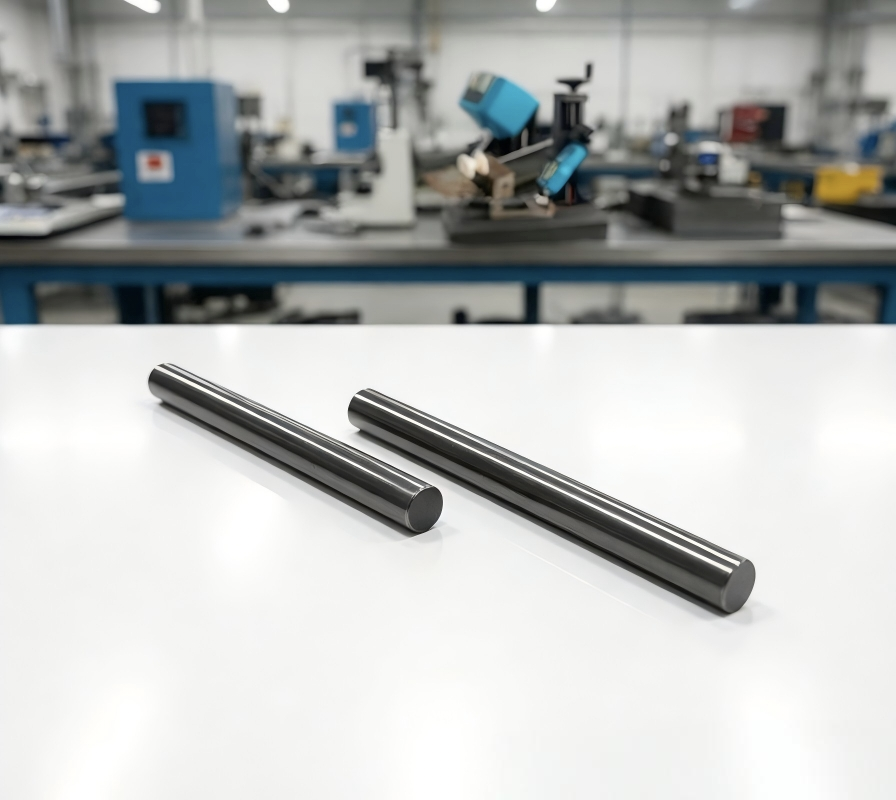
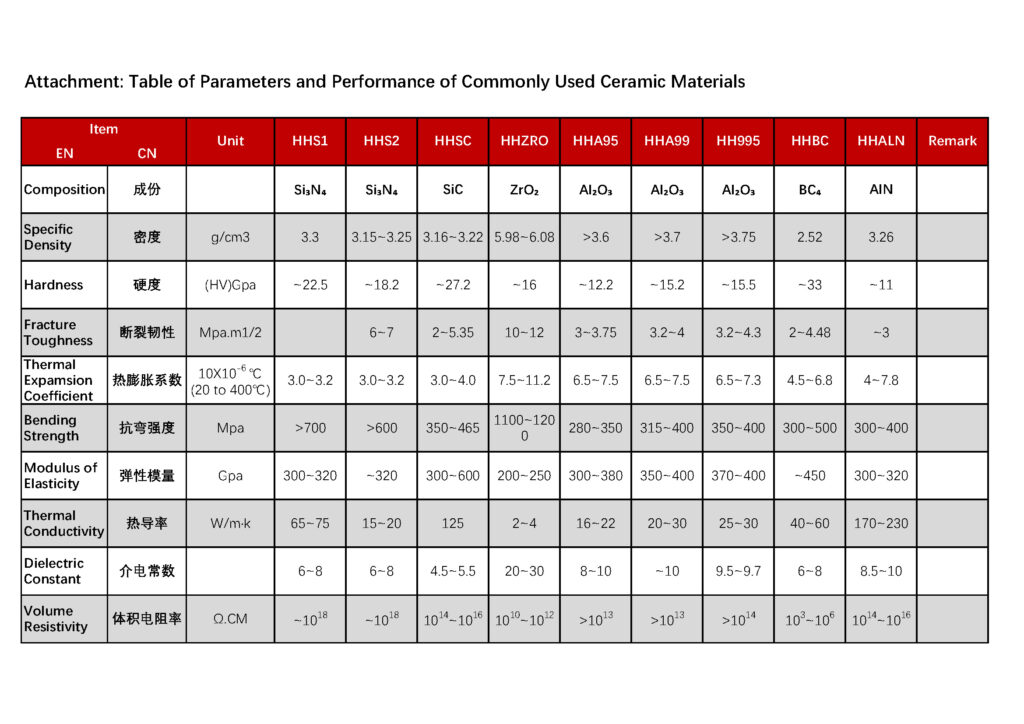
Not all silicon nitride is created equal—different processes yield significantly different parameters. For gas-pressure-sintered standard grades, flexural strength is roughly 680–850 MPa, fracture toughness 6–7 MPa·m¹/², and thermal conductivity can reach 40–70 W/(m·K), allowing long-term use in oxidizing atmospheres up to 1300°C. Hot-pressed sintered versions, being denser, can push flexural strength to 800–1000 MPa and Vickers hardness to 1400–2200 HV—harder than tungsten carbide—yet with a density of only 3.2 g/cm³, one-quarter that of tungsten carbide. The lower roller inertia translates into energy savings for drive motors on high-speed stations.
At Shenzhen Xinluo Technology Co., Ltd., the technical team produces hot-pressed sintered silicon nitride rollers with a thermal expansion coefficient controlled at 3.0–3.5 × 10⁻⁶/K—roughly one-third that of tungsten carbide. This makes them less prone to cracking under rapid heating and cooling cycles. In applications like glass annealing kilns and PERC solar cell sintering lines, where temperatures swing repeatedly, this parameter is actually more critical than “absolute hardness.”
When selecting a grade, don’t just look at the upper limits in the brochure. Porosity <0.5% and Weibull modulus >15 are the hard thresholds for batch consistency. Otherwise, rollers from the same batch can vary in service life by as much as 30%.
II. Pros, Cons, and Market Validation
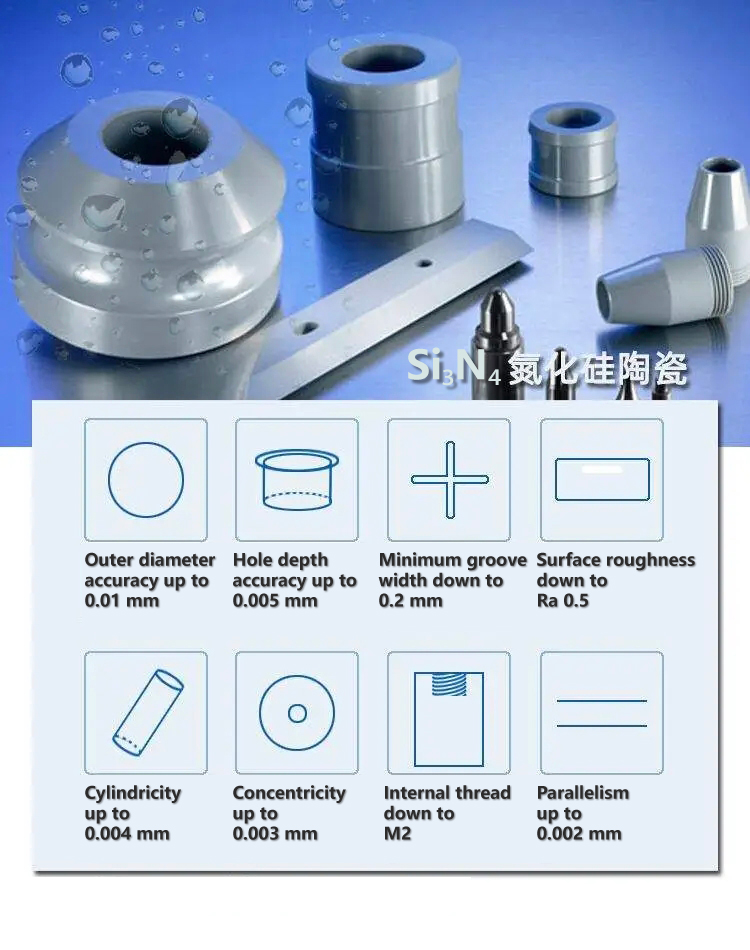
Let’s address the shortcomings first, no sugarcoating. The unit purchase price is indeed several times that of tungsten carbide or heat-resistant stainless steel. Post-sintering, diamond grinding is required for precision finishing, and costs skyrocket for complex shapes. Brittleness is inherent—stations subject to severe impact or hard collisions are prone to chipping. Also, the supplier qualification process at high-end equipment manufacturers is lengthy, typically taking at least a year.
But flip the calculation to total lifecycle cost, and things get interesting. On lithium battery electrode coating stations, switching to silicon nitride rollers reduces metal ion contamination, improving battery consistency and cycle life, while roller service life extends to 5–10 times that of chrome-plated steel rollers. On high-speed wire rod finishing lines, throughput can exceed 3000 tons—six times that of stainless steel guides. Fewer shutdowns, less labor for roller changes—the consumable cost per ton of product actually goes down.
Domestically, the market is still in the deepening phase of “metal-to-ceramic substitution.” Top-tier solar and battery manufacturers have already incorporated silicon nitride solutions into their standard designs, but most mid-sized and smaller production lines are still watching from the sidelines.
III. Don’t Blindly Apply Across All Scenarios—Prioritize These Types
Not every station is suitable for a forced swap. For room-temperature, low-speed transmission where metal performs perfectly fine, switching to ceramic is nothing but added cost. The places where it truly pays off are where metal struggles:
- PERC solar cell sintering — no volatilization up to 1400°C, no silicon wafer contamination;
- Lithium battery electrode coating/calendering — electrical insulation + metal ion prevention, stable electrode flatness;
- Float glass annealing kilns, tempering furnaces — thermal shock resistance >500°C, no cracking under rapid heating/cooling;
- High-speed wire rod finishing, specialty alloy rolling — outstanding high-temperature hardness, high surface finish.
IV. Market Trends and Outlook
According to QYResearch data, the global silicon nitride ceramic roller market was approximately $340 million in 2025, projected to reach $432 million by 2032, with a CAGR of 3.5%. China’s market growth rate exceeds the global average, and the Asia-Pacific region accounts for half of the global market. However, the high-end segment has long been dominated by Kyocera, Toshiba Materials, and CeramTec. Domestic companies pursue a strategy of “niche scenarios + customized formulations.”
Shenzhen Xinluo Technology Co., Ltd. already has numerous batch application cases in the electronics/semiconductor, solar, and new energy sectors, covering the entire process from powder processing to precision machining. Rollers, guides, and pulleys can all be formulated according to site-specific operating conditions. Over the next year or two, two areas will be key battlegrounds for domestic manufacturers: forming and sintering of large-size rollers, and composite assembly of ceramic-metal flanges. Once wide-width production lines prove viable, the substitution potential will climb another level.
For an initial switch, don’t roll it out across the entire line. Pick one or two of the most demanding stations for a controlled comparison. Run a full replacement cycle before deciding whether to expand. That’s far safer than a blanket swap based on gut feel.
About Xinluo Ceramic:
Shenzhen Xinluo Technology Co., Ltd. (Xinluo) specialises in researching and developing all kinds of ceramic components, including Zirconia, Alumina, AlN, SiC, Si3N4 and mixed powder, as well as manufacturing. With an extensive selection of advanced ceramic materials and precision machining capabilities, we can deliver customised components with speed and accuracy. Depending on the application, Xinluo can help provide solutions for different materials.
Photovoltaic Ceramics Products Information:
