
If you work in power grounding components, you’ve probably been asked this a lot lately: traditional galvanized steel clamps work just fine—why switch to silicon carbide ceramic ones? Honestly, not every scenario calls for a change. But there are a few operating conditions—coastal wind farm tower foundations, substations in chemical industrial zones, and high-speed rail lightning protection grounding—where the maintenance savings after just one year can not only offset the price difference but leave something left over. Let’s lay out the key things about silicon carbide ceramic grounding clamps clearly.
I. Look at These Technical Specs First—More Useful Than Comparing Unit Prices Alone
Grounding clamps have a different focus from seal rings or focus rings. The core requirements are threefold: the balance between conductivity and insulation, the ability to withstand instantaneous high-current lightning strikes, and long-term outdoor corrosion resistance. The parameters the industry tracks show a significant difference between the reaction-bonded and pressureless sintered routes:
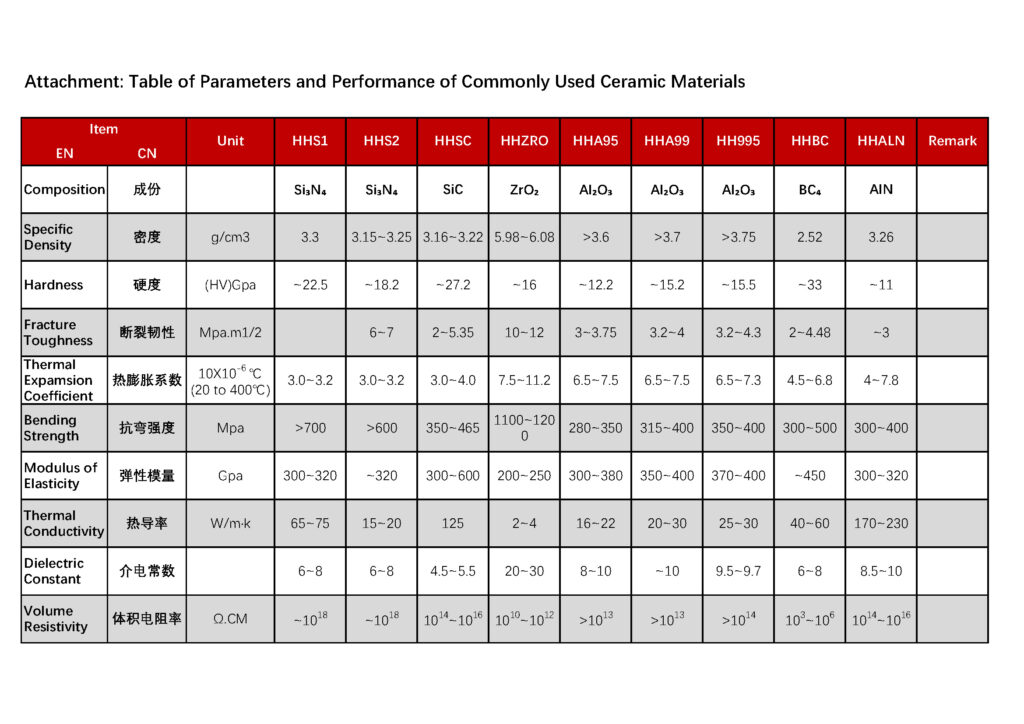
- Density and Densification: Reaction-bonded type: 3.00–3.05 g/cm³, SiC content ≥90%. Pressureless sintered: up to 3.10–3.20 g/cm³, SiC content ≥98%. Higher densification means fewer pathways for coastal salt fog to penetrate.
- Strength and Hardness: Flexural strength ≥350 MPa (pressureless sintered can reach 380+), Vickers hardness HV 2500 and above, Mohs hardness 9.2–9.5. The clamp itself doesn’t bear heavy loads, but these specs determine whether edges chip during transport and installation.
- Electrical Matching: Volume resistivity in the 10³–10⁵ Ω·cm range is most commonly used. Pure insulation won’t work (grounding needs current discharge), and pure conductors won’t work either (current limiting and voltage division are required). Silicon carbide leverages its semiconducting properties to sit right in this window, with a dielectric strength of at least 14 kV/mm.
- Thermal Properties and Temperature Tolerance: Thermal conductivity 120–200 W/(m·K), thermal expansion 4.2 × 10⁻⁶/°C, service temperature 1300–1400°C. It can withstand the temperature rise from instantaneous lightning currents of thousands of amperes without cracking.
- Corrosion Resistance: Chemically inert toward seawater, acid rain, and industrial atmospheres. Pressureless sintered grades with free silicon controlled within 1% offer a clear advantage in high-Cl⁻ environments.
When Shenzhen Xinluo Technology Co., Ltd. takes orders for these non-standard clamps, we make it a habit to ask clients two things first: the corrosion level of the operating environment, and whether they need to go the pressureless sintered route. Reaction-bonded is cheaper for volume; pressureless delivers longevity. Mixing them up can lead to trouble—we’ve seen a southern coastal wind farm opt for the cheaper reaction-bonded version in the first batch. After three years, signs of corrosion penetration appeared in the salt spray zone. The second batch was entirely switched to pressureless sintered to stabilize the situation.
II. Market Validation and Product Positioning
The grounding clamp niche doesn’t have the same fanfare of industry data as seal rings, but it falls under the broader category of “silicon carbide ceramic components for new energy power systems.” In 2025, the global silicon carbide ceramics market is approximately $6.95 billion, with China’s share at RMB 20 billion. Within this, China’s seal ring market size is RMB 4.78 billion, with a domestic substitution rate already at 62%–65%. Grounding clamps are an order of magnitude smaller in volume, but the growth logic is the same: continued UHV construction under the 14th Five-Year Plan, offshore wind power installations, and the rollout of 800V fast-charging stations—all three downstream sectors are pulling demand.
In terms of product positioning, silicon carbide ceramic grounding clamps are not meant to replace the entire galvanized steel market. Instead, they target the segment demanding high corrosion resistance + high reliability: ordinary inland substations below 110 kV still use galvanized steel with anti-corrosion paint as the mainstream. But for coastal areas, chemical industrial zones, and plateau freeze-thaw cycling zones, the TCO (total lifecycle cost) of silicon carbide clamps actually works out cheaper—no need to excavate and rebuild the grounding grid every 3–5 years. This point is particularly compelling for wind farms.
III. Pros, Cons, and Scenario Targeting
Let’s get the disadvantages out of the way first, no beating around the bush: the unit price is 5–8 times that of galvanized steel; it’s brittle, with poorer mechanical impact resistance than metal; you can’t use a sledgehammer during installation. That’s the honest truth.
Now the advantages: corrosion resistance, maintenance-free, stable current discharge characteristics, and a service life starting at 15 years. Let’s run the numbers: for a 200 MW offshore wind project, if the tower foundation grounding uses copper-clad steel, corrosion after 5 years would require divers for underwater maintenance—a single mobilization of vessel plus crew costs six figures. Switch to pressureless sintered SiC clamps, and they basically don’t need touching within the design life. Spread out the TCO, and silicon carbide actually ends up cheaper.
We currently target four directions:
- Offshore wind turbine tower grounding — salt spray + splash zone, high Cl⁻ concentration. Pressureless sintered grade is the best match.
- UHV converter station grounding grids — high instantaneous lightning current, requiring sufficient thermal conductivity.
- Chemical park substation grounding — acid fog + soil corrosion combined. Reaction-bonded for entry level, pressureless for advanced.
- High-speed rail/urban rail lightning protection grounding — vibration + cross-soil types, demanding high dimensional stability.
IV. Market Trends and Future Layout
At the high end of the global SiC ceramics market, Saint-Gobain, CoorsTek, and Kyocera still dominate. But for niches like grounding components that require “mid-to-high performance with fast custom prototyping,” domestic manufacturers are actually more agile. Haihe’s current rhythm is: reaction-bonded for mass production cost reduction; pressureless sintered for coastal/chemical high-corrosion projects; CVD is off the table for now (grounding components don’t need 99.9995% purity—the premium wouldn’t justify it).
Looking ahead, the penetration rate of 800V high-voltage platforms is projected to hit 40% by 2025, driving volume growth in grounding/insulation components for charging piles and energy storage inverters. Global old-grid retrofitting is also seeking high-quality supply chains. If we can push reaction-bonded yield rates down another notch, the grounding clamp niche could land several multi-million-dollar clients within two to three years.
Whether to choose silicon carbide ultimately comes down to operating conditions: seaside locations, chemical zones, and high-current lightning areas—switch early and save yourself the headache. For ordinary inland stations in dry areas, if galvanized steel does the job, don’t upgrade unnecessarily. No material is universal. True cost-effectiveness comes from getting the match right.
About Xinluo Ceramic:
Xinluo Technology Co., Ltd. (Xinluo) specialises in researching and developing all kinds of ceramic components, including Zirconia, Alumina, AlN, SiC, Si3N4 and mixed powder, as well as manufacturing. With an extensive selection of advanced ceramic materials and precision machining capabilities, we can deliver customised components with speed and accuracy. Depending on the application, Xinluo can help provide solutions for different materials.
Product Information: https://xinluoceramic.com/product-tag/silicon-carbide/
