
When a roller bends in a roller hearth kiln, the entire line has to stop. In the past couple of years, as new energy kilns have multiplied, the clients coming to us about silicon carbide rollers aren’t asking “how much per piece” anymore. Their biggest question is: “Will the deflection exceed tolerance after six months at 1380°C? And can it withstand the alkaline fumes from lithium battery cathode materials?” It makes more sense to break down the specifications first, then discuss selection and scenarios, rather than jumping straight to a quote.
I. Don’t Just Read the Brochure—Keep Your Eye on These Numbers
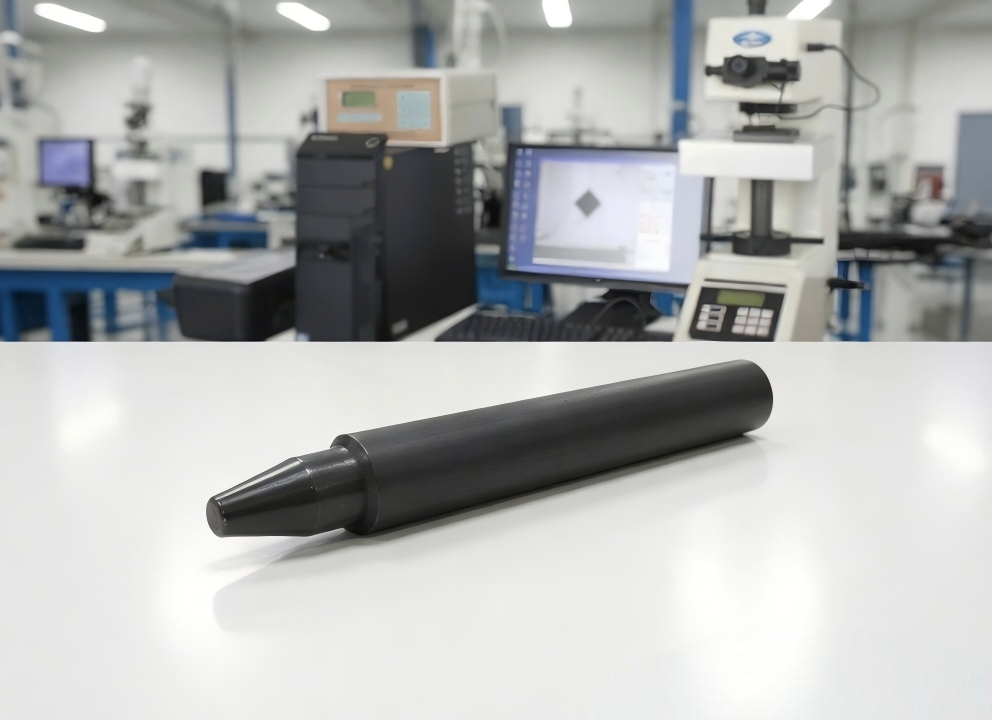
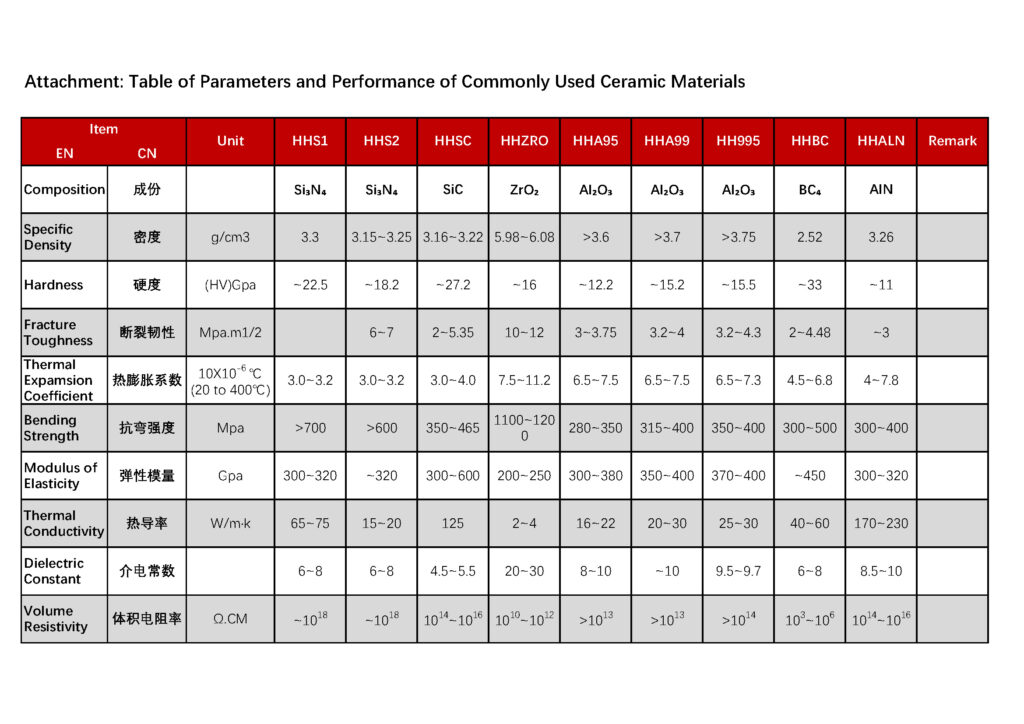
For reaction-bonded silicon carbide (RBSiC) rollers, the mainstream grades come in two common SiC content levels: 85% and 88%. The corresponding free silicon content is 10–15% and 8–12%, respectively, with bulk density ≥3.02–3.05 g/cm³ and apparent porosity ≤0.5% (high-density versions can compress this to below 0.1%).
But what truly determines whether a roller can hold up in a kiln is its high-temperature flexural strength at 1300°C. Achieving 250–280 MPa at room temperature isn’t remarkable. Only products that maintain 180–200 MPa or higher at 1300°C are qualified for lithium battery cathode kilns. With a thermal expansion coefficient controlled around 4.5 × 10⁻⁶/°C (RT–1000°C) and thermal conductivity of 45–50 W/(m·K), the roller can survive rapid heating and cooling without cracking.
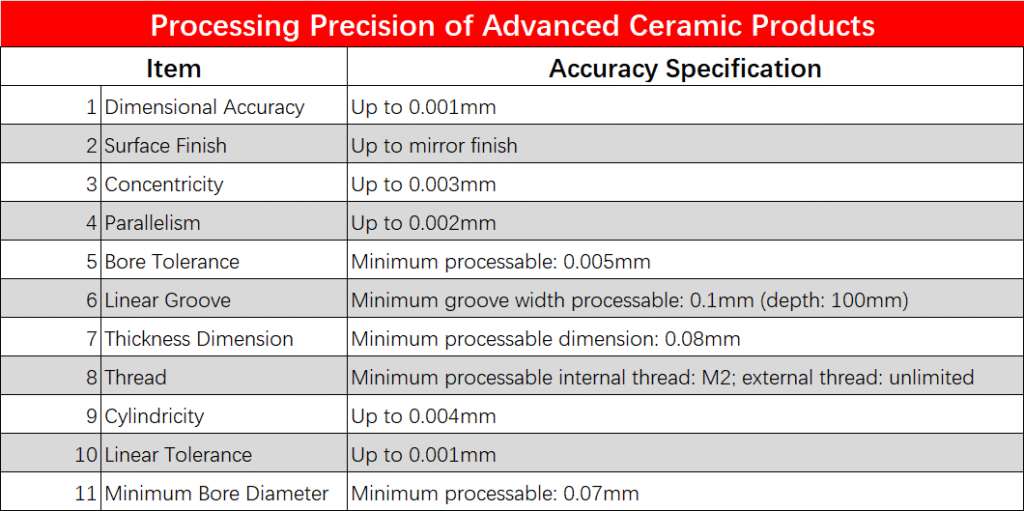
Dimensions are easily overlooked: the outer diameter machining tolerance should be h7 (±0.1 mm), straightness ≤0.5 mm/m, roundness ≤0.2 mm, and edge chipping depth kept within 1.0 mm. At Hangzhou Haihe Precision Ceramics Co., Ltd., we generally control roller roundness to ±0.1 mm and surface roughness to Ra ≤0.8 μm. This is primarily to serve the lithium battery and aluminum processing lines that demand “no material sticking, fewer roller changes”—these two parameters directly affect how smoothly the saggars run.
💡 A quick note: If your application requires temperatures above 1600°C or an inert atmosphere, you need to move up to pressureless sintered SiC (SiC >99%, free silicon approaching 0, working temperature up to 1900°C). That’s a different pricing tier altogether—don’t benchmark it against RBSiC quotes.
II. Market Validation: Data Beats Sales Talk
The global silicon carbide ceramics market was approximately RMB 43.7 billion in 2024, projected to reach RMB 71.6 billion by 2031. Domestically, the market had already reached RMB 8.99 billion in 2023, with the ceramic roller segment growing at a CAGR of about 8.5%, primarily driven by the new energy sector.
Ground-level data is even more convincing:
- In construction ceramics and daily-use ceramics roller hearth kilns, SiC roller lifespan is 5–10 times that of alumina rollers, with the best cases reaching 10–15 times.
- In lithium battery cathode roller hearth kilns, high-performance SiC rollers extend replacement cycles from 6–9 months to 12–18 months, reducing defect rates caused by bending or adhesion by 30–40%.
- A leading manufacturer in Shandong holds roughly 40% of the domestic SiC roller market. The claim that “four out of ten rollers in new energy production lines come from Shandong” has been circulating in the industry for some time.
III. Pros and Cons: No Beating Around the Bush, Then Talk About Positioning
Three strengths: flexural strength still holding at 500–600 MPa at 1400°C (for the pressureless sintered route); good inertness toward lithium salts and alkaline fumes; overall maintenance costs more than 70% lower than alumina.
Weaknesses must also be acknowledged: fracture toughness is only about 3 MPa·m¹/²—it cracks on impact, so transportation and kiln loading require care; initial procurement cost is significantly higher than alumina, requiring long service life to even out the accounting.
So the product positioning is not “replace all rollers,” but rather lock onto these specific operating conditions: high temperature + heavy load + corrosive atmosphere + continuous operation. Construction ceramics firing zones, lithium battery cathode/anode sintering, photovoltaic glass annealing/sintering, electronic ceramics & magnetic materials, and aluminum/copper strip heat treatment—these five scenarios all share the common requirements of temperatures above 1000°C, months of non-stop operation, and sensitivity to dimensional stability and cleanliness.
IV. Domestic and International Landscape & Haihe’s Approach
Saint-Gobain, CoorsTek, and Kyocera remain the benchmarks in the high-end foreign segment. Domestically, companies like Sanzer New Materials, King Kong Group, and Shandong Huaao are catching up fast. In the reaction-bonded segment, Chinese products can already compete on cost-performance.
Shenzhen Xinluo Technology Co., Ltd.’s approach hasn’t been to compete on the cheapest general-purpose construction ceramics models. Instead, they differentiate through dual-process capability: reaction bonding + pressureless sintering. Clients in lithium battery cathodes and aluminum processing want “lower free silicon, anti-adhesion surface treatment, and consistent batch quality.” Haihe has spent over a year running verification trials locally in Zhejiang and with several nearby aluminum processors and ceramics factories. The math on replacement cycles and defect rates—clients calculate it themselves.
V. What to Watch in the Next Three Years
On the process front—reduce free silicon, improve high-temperature oxidation resistance, pushing RBSiC a bit further into 1400°C+ oxidizing atmospheres. On the product front—move pressureless sintered and recrystallized SiC into higher-temperature segments in semiconductors and photovoltaics. On the market front—domestic substitution plus exports to Southeast Asia and the Middle East will develop in parallel.
When it comes to rollers, the difference in unit price per piece doesn’t matter much. What matters is stopping the kiln two fewer times a year, scrapping two fewer batches of greenware. That changes the whole equation. When selecting, first look at your operating temperature, atmosphere, and load span, then work backward to decide between RBSiC or pressureless sintering. That’s far more reliable than asking, “What’s your cheapest option?”
About Xinluo Ceramic:
Shenzhen Xinluo Technology Co., Ltd. (Xinluo) specialises in researching and developing all kinds of ceramic components, including Zirconia, Alumina, AlN, SiC, Si3N4 and mixed powder, as well as manufacturing. With an extensive selection of advanced ceramic materials and precision machining capabilities, we can deliver customised components with speed and accuracy. Depending on the application, Xinluo can help provide solutions for different materials.
Product Information: https://xinluoceramic.com/product-tag/silicon-carbide/
