
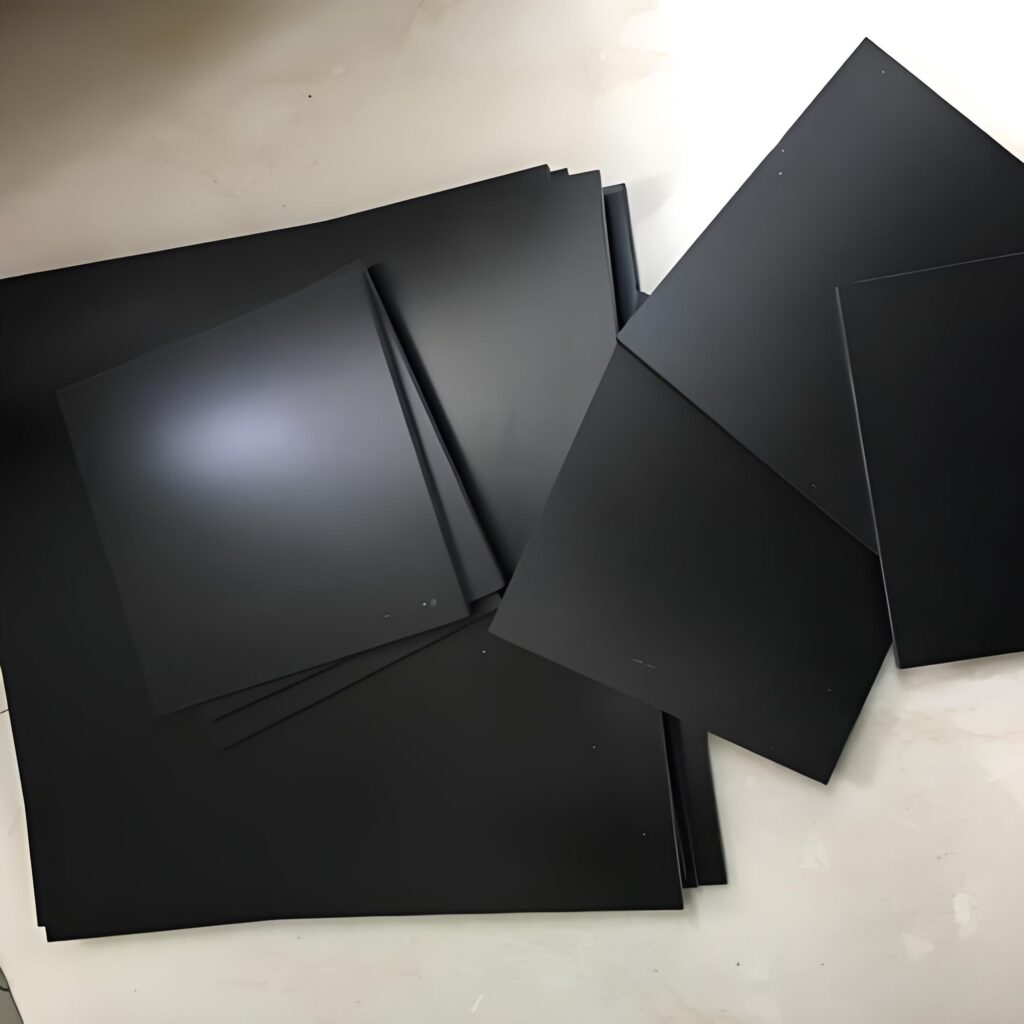
keywords: advanced ceramic Silicon Nitride Si₃N₄ Si3N4
In high-end manufacturing fields such as metallurgy, new energy, and semiconductors, equipment operates for extended periods under harsh conditions involving high temperatures, strong corrosion, and severe thermal cycling. Traditional insulating materials often face challenges like short service life, poor thermal stability, and frequent maintenance, directly impacting production continuity and overall costs. Silicon Nitride (Si₃N₄) ceramic insulating blocks, leveraging their unique material properties, are progressively becoming a key solution to these challenges, providing reliable assurance for the stable operation of high-temperature industrial equipment.
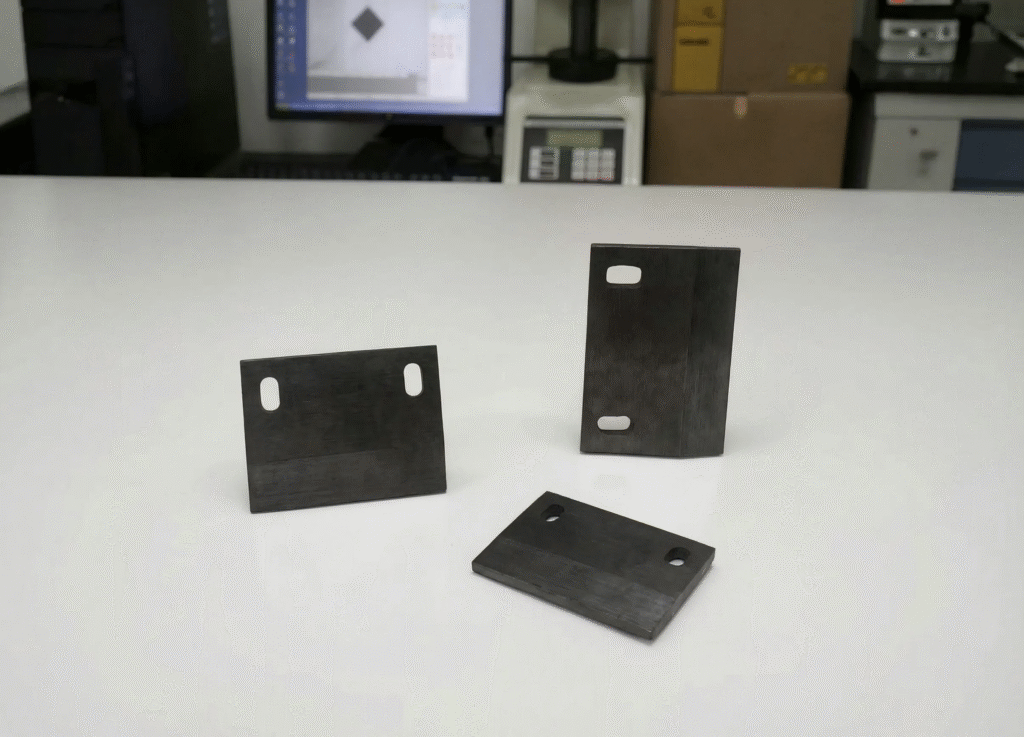
I. Product Details and Technical Specifications: The Foundation of Exceptional Performance
The core advantages of silicon nitride ceramic insulating blocks stem from the material’s own excellent properties. Regarding physical and chemical characteristics, silicon nitride has an extremely low coefficient of thermal expansion (CTE), approximately 3.2 × 10⁻⁶/°C. This means its dimensions remain nearly unchanged under drastic temperature fluctuations, effectively preventing cracking caused by thermal stress. Its thermal conductivity ranges between 15-30 W/(m·K), allowing it to effectively block heat transfer while possessing some heat dissipation capability, helping to maintain thermal balance.
In terms of mechanical properties, silicon nitride ceramics perform exceptionally well. Its room-temperature flexural strength can reach over 800 MPa, and even at a high temperature of 1200°C, it can still maintain a strength exceeding 500 MPa. Its Vickers hardness is as high as 1500-2000 HV, offering excellent wear resistance.
Chemical stability is equally prominent. In an oxidizing atmosphere, it forms a dense silica protective layer on its surface, preventing further oxidation, with a maximum service temperature reaching 1400°C. Furthermore, it exhibits good corrosion resistance against most acids, alkalis, and molten metals (such as aluminum and zinc).
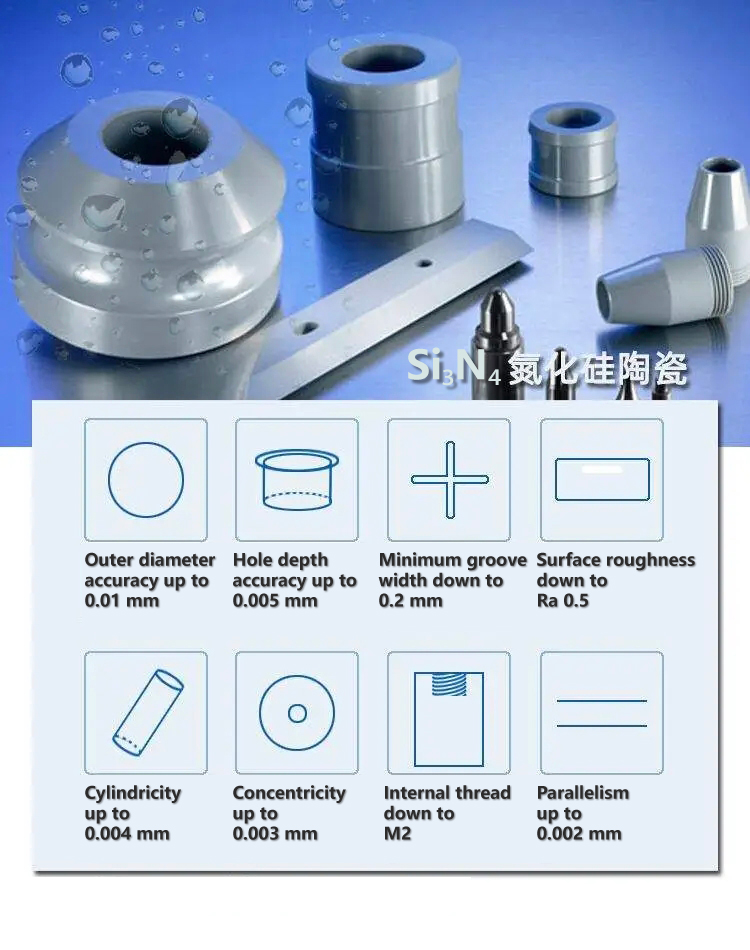
In terms of manufacturing processes, industry-leading companies like Shenzhen Xinluo Technology Co., Ltd. utilize a composite process combining pressureless sintering with hot isostatic pressing (HIP), supplemented by a self-developed composite sintering aid system. This allows them to stably control the porosity of silicon nitride insulating blocks at an extremely low level of 0.3%-0.5%, thereby enhancing the flexural strength to over 1000 MPa, meeting the stringent requirements for material consistency and reliability in aerospace and high-end energy equipment.
II. Market Validation and Application Cases: Data-Driven Value Demonstration
The value of silicon nitride ceramic insulating blocks has been empirically proven across multiple industrial scenarios.
In the metallurgical industry, for example, after a non-ferrous metal smelting furnace replaced traditional materials with silicon nitride heat-resistant blocks, the equipment maintenance cycle was significantly extended from the original 3 months to 2 years, while overall energy consumption was reduced by approximately 15%. This is attributed to the material’s excellent thermal shock resistance, enabling it to withstand rapid temperature changes exceeding 800°C without cracking.
In the new energy sector, silicon nitride ceramics are used in key components such as insulating support plates for hydrogen fuel cell stacks and neutron radiation shielding liners for nuclear fusion devices. Its ability to withstand extreme temperatures and radiation environments provides the material foundation for clean energy technology development.
In semiconductor manufacturing, low-porosity silicon nitride insulating components are used in vacuum chambers or as wafer carriers. Their dense structure prevents impurity adsorption, aligning with the stringent cleanliness standards of semiconductor processes.
III. Product Positioning and Advantages/Disadvantages Analysis: Basis for Rational Selection
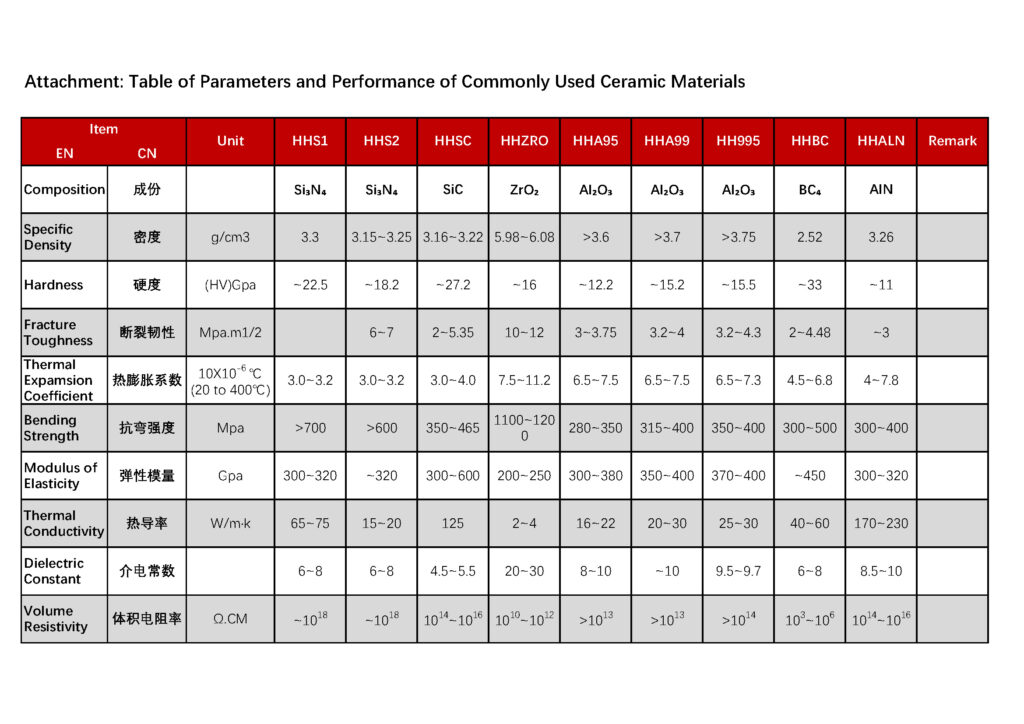
Compared to other industrial ceramics like alumina (Al₂O₃) and silicon carbide (SiC), silicon nitride ceramic insulating blocks are positioned as a high-performance, long-life solution.
Compared to alumina, silicon nitride offers significantly higher fracture toughness (can exceed 6.5 MPa·m¹/²) and notably better thermal shock resistance, but its raw material and manufacturing costs are also relatively higher. Compared to silicon carbide, silicon nitride performs better in oxidation resistance and mechanical toughness, especially in oxidizing environments above 1000°C, although SiC typically has higher thermal conductivity.
Its core advantages can be summarized as: high strength and hardness, excellent thermal shock resistance, good chemical stability, dimensional stability due to low CTE, and outstanding high-temperature performance. The main disadvantages are its higher production cost and inherent brittleness, requiring careful design when subjected to strong impacts.
Therefore, selection decisions should not focus solely on initial unit price but should comprehensively evaluate the “Total Cost of Ownership (TCO) over the service cycle.” Particularly for stations with over 20,000 annual temperature cycles, the losses avoided by reducing unplanned downtime far outweigh the difference in material cost.
IV. Scenario Targeting and Applicable Fields
Silicon nitride ceramic insulating blocks are not a universal material; their value is maximized in specific scenarios. They are especially suitable for the following fields:
- High-Temperature Furnaces and Heat Treatment Equipment: Such as steel smelting furnaces, aluminum profile extrusion dies, and vacuum sintering furnaces, replacing graphite or metal components to significantly extend service life.
- New Energy and Power Equipment: Including hydrogen fuel cells, nuclear energy devices, and gas turbine hot-section components requiring resistance to extreme thermal environments and corrosion.
- Semiconductor and Precision Electronics Manufacturing: Used in diffusion furnaces, CVD equipment, and other process tools requiring high cleanliness and thermal stability.
- Automotive Powertrain Systems: Applied in high-temperature areas like turbochargers and pre-combustion chambers for lightweighting and improved thermal efficiency.
- Chemical and Metallurgical Processes: Serving as corrosion-resistant insulating components in molten metal processing and strong acid/alkali reaction environments.
V. Domestic and International Market Trends and Future Outlook
The global demand for high-performance ceramics continues to grow. Data indicates that the global market size for silicon nitride ceramic products was approximately 1.10 billion USD in 2025 and is projected to grow to 1.76 billion USD by 2035, representing a compound annual growth rate (CAGR) of approximately 4.83%. Growth drivers primarily come from the urgent demand for material durability and high-temperature performance in sectors like aerospace, new energy vehicles, and semiconductor equipment manufacturing.
In this context, Shenzhen Xinluo Technology Co., Ltd., leveraging its advantages in local R&D, global collaboration, and scaled manufacturing, is deeply engaged in custom precision ceramic structural parts. It is committed to providing customers with high-reliability, long-life ceramic material solutions, helping to reduce costs and improve efficiency in advanced ceramic high-end manufacturing.
Summary
Silicon nitride ceramic insulating blocks, with their excellent high-temperature stability, thermal shock resistance, and chemical inertness, provide a reliable choice for solving insulation and load-bearing challenges in high-end manufacturing. Their value lies not only in replacing traditional materials but also in significantly improving production efficiency from a lifecycle perspective by greatly extending equipment life and reducing maintenance frequency and energy consumption. As material technology advances and mass production efficiency improves, silicon nitride ceramics are poised to play a crucial role in a wider range of industrial frontiers, becoming a fundamental material supporting industrial upgrading.
About Xinluo Ceramic:
Xinluo Technology Co., Ltd. (Xinluo) specialises in researching and developing all kinds of ceramic components, including Zirconia, Alumina, AlN, SiC, Si3N4 and mixed powder, as well as manufacturing. With an extensive selection of advanced ceramic materials and precision machining capabilities, we can deliver customised components with speed and accuracy. Depending on the application, Xinluo can help provide solutions for different materials.
Product Information: https://xinluoceramic.com/product-tag/silicon-nitride/
