
Semiconductor Etching Equipment: High-Temperature Corrosion and Seal Failure? – A Quantified Solution: Aluminum Nitride Ceramic Plungers
In cutting-edge sectors such as semiconductor manufacturing, new energy, and high-end chemical processing, the fluid-handling systems of core equipment face unprecedentedly harsh challenges. When traditional metal or conventional ceramic components frequently “fail” under sustained high temperatures, highly corrosive media, and frequent cyclic loading, engineers are compelled to seek an ultimate material solution that can simultaneously conquer temperature, stress, corrosive media, and fatigue. Today, we delve into a key component that is changing the game—the high-temperature-resistant aluminium nitride (AlN) ceramic plunger—and explore how it provides deterministic, reliable assurance for extreme operating conditions through quantified performance parameters.
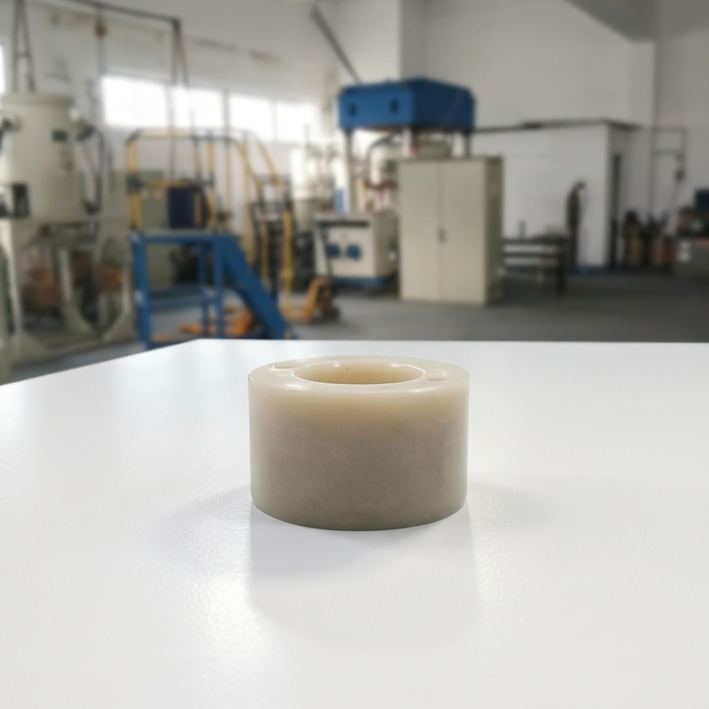
I. Quantifying Operating Conditions: Defining the Challenge Boundaries
To select the right material, one must first clearly understand the battlefield. The arena for aluminium nitride ceramic plungers is far from ordinary. Their typical application environments can be precisely quantified across the following dimensions:
- Temperature: Continuous operating temperatures can reach above 800°C, with short-term peak tolerance exceeding 1200°C. For example, in polysilicon reduction furnaces or certain specialized chemical reactors, plungers must directly withstand continuous exposure to high-temperature gases or molten salts.
- Stress: During high-speed reciprocating motion, plungers endure complex mechanical stresses, including compressive stress, shear stress, and thermal stress induced by thermal expansion mismatch. Their flexural strength is typically required to be no less than 350 MPa to ensure structural integrity under high-pressure sealing conditions.
- Media: Faced with hydrofluoric acid, phosphoric acid, strong alkaline solutions, molten metals (e.g., aluminium, copper), and even highly reactive plasmas, aluminium nitride demonstrates exceptional chemical inertness, with virtually no reaction—an advantage metallic materials can hardly match.
- Cycle Count: In automated production lines or analytical instruments, plungers may reciprocate at frequencies of tens to even hundreds of cycles per minute, demanding materials with extremely high fatigue and wear resistance to ensure dimensional stability even after millions of cycles.
II. Measured Data: Performance Beyond Theory
Theoretical specifications are one thing; verified data is conclusive. Aluminum nitride ceramic can undertake this critical role due to its series of proven, robust metrics:
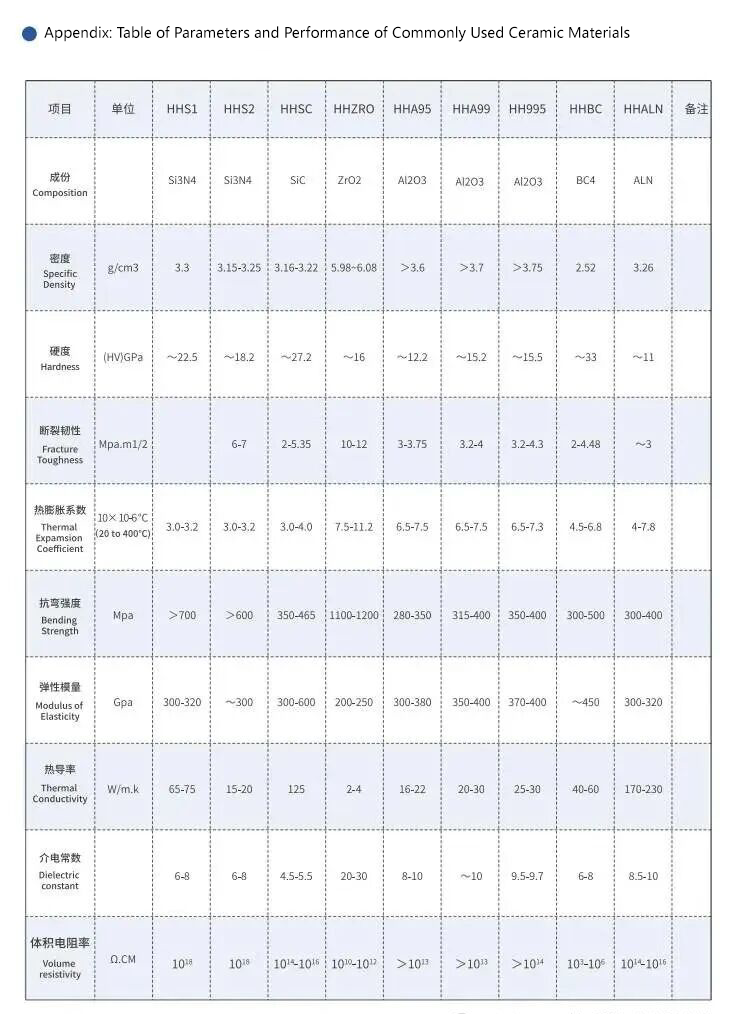
- The King of Thermal Management: Its thermal conductivity, as measured, consistently ranges from 170-200 W/(m·K), which is 5-8 times that of ordinary alumina ceramics. This means it can quickly and evenly dissipate frictional heat or heat conducted from the media, avoiding material degradation or seal failure caused by localised overheating. Case studies show that in the vacuum high-temperature environment of LED sapphire crystal growth furnaces, after adopting custom AlN plungers, temperature fluctuations in key furnace zones were successfully controlled within ±1°C.
- A Balance of Strength and Hardness: With a Vickers hardness as high as 11-12 GPa and a Mohs hardness of approximately 7-8, it ensures excellent wear resistance. Simultaneously, its flexural strength can reach 300-450 MPa, sufficient to handle complex stress states.
- Dual Excellence in Insulation and Corrosion Resistance: Its volume resistivity is greater than 10¹⁴ Ω·cm, providing complete insulation and eliminating the risk of electrochemical corrosion. It exhibits strong resistance to attack by most acids, alkalis, and molten salts. In semiconductor etching processes, it effectively resists plasma corrosion, reduces metallic ion contamination, and improves wafer yield.
- The Wonder of CTE Match: Its coefficient of thermal expansion (approximately 4.5×10⁻⁶/K) is very close to that of silicon. This results in minimal thermal stress when paired with other silicon-based components in semiconductor equipment due to temperature changes, fundamentally avoiding seal leakage or structural cracking caused by mismatched thermal expansion and contraction.
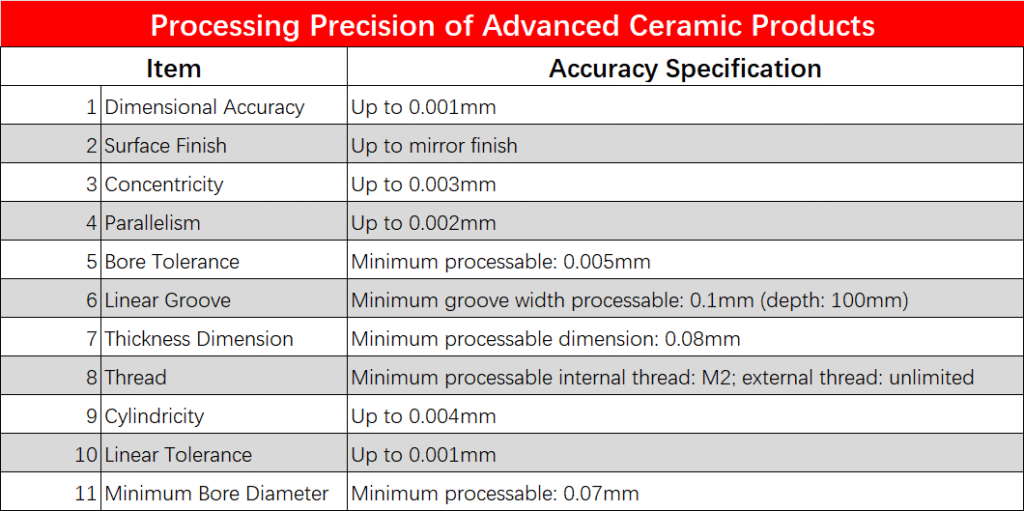
III. From Material to Component: Process Determines the Performance Ceiling
Exceptional performance is inseparable from precision manufacturing. The forming and sintering of aluminium nitride ceramics constitute the technological core. Currently, for complex, precision structural parts like plungers, Ceramic Injection Moulding (CIM) technology demonstrates unique advantages. It involves mixing ultra-fine, high-purity aluminium nitride powder with tailored binders, injection moulding in precision moulds, followed by intricate debinding and high-temperature sintering, ultimately yielding near-net-shape, high-density components.
This process sounds straightforward but is fraught with significant challenges. The uniformity of the feedstock, control of injection parameters, defect-free, slow removal of organics during debinding, and final densification sintering in a nitrogen atmosphere at temperatures exceeding 1800°C—each step requires meticulous control. Minor deviations in any link can lead to product cracking, deformation, or failure to meet specifications. This is precisely what separates suppliers based on their technical prowess. Technical teams, such as those at Shenzhen Xinluo Technology Co., Ltd., have accumulated profound expertise in core processes like powder treatment and precise control of sintering profiles, enabling the stable production of high-performance aluminium nitride ceramic components.
IV. Trends and Value: Beyond Substitution, It’s About Empowerment
Market data clearly outlines the growth trajectory of aluminium nitride ceramics. In 2024, the global market size for aluminium nitride ceramics surpassed $100 million, with China’s market reaching approximately ¥1.155 billion. The core drivers of this growth are the booming high-tech industries, including the localisation of semiconductor equipment, new energy vehicles (especially the heat dissipation demands from SiC modules driven by 800V high-voltage platforms), and 5G communication base stations.
Its value extends far beyond simply replacing metals or alumina. In semiconductor front-end manufacturing equipment (e.g., etching machines, CVD equipment), it is the “key player” enhancing process stability and reducing defect rates. Within the electric drive systems of new energy vehicles, it acts as the “invisible guardian”, ensuring safe heat dissipation for high-power-density IGBT/SiC modules. In the aerospace sector, it serves as a “reliable partner” capable of withstanding the extreme cold of liquid hydrogen and the strong corrosion of propellants. Choosing an aluminium nitride ceramic plunger is not merely selecting a component; it is opting for a high-reliability technological pathway oriented towards the future.
V. Delivery Reliability and Technical Support: The Key to Closing the Loop
Even the best material is a castle in the air if it cannot be delivered consistently and adapted to the application. Between the drawing board and a component operating stably within equipment lie multiple hurdles: process adaptation, batch-to-batch consistency control, and application-specific matching. This demands that suppliers understand not only the material but also the application.
Reliable technical support capability is demonstrated by: Can the supplier provide material selection and structural design optimisation advice based on the customer’s specific operating conditions (media composition, temperature profiles, pressure cycles)? Can they provide ample performance test data (e.g., thermal shock cycling tests, media corrosion experiments) before delivery? Can they assist customers in resolving on-site process issues like installation and sealing compatibility? The value of companies deeply rooted in the industry, like Shenzhen Xinluo Technology Co., Ltd., lies precisely in building end-to-end capabilities—from material R&D and precision manufacturing to application support—ensuring that every delivered aluminium nitride ceramic plunger performs as designed theoretically within the customer’s equipment.
Summary
Confronted with the combined challenges of high temperature, corrosion, the need for electrical insulation, and high-precision sealing, the high-temperature-resistant aluminium nitride ceramic plunger offers a quantifiably validated solution. Leveraging its unique and balanced set of physical and chemical properties, it is transformed into physical form through advanced precision manufacturing processes and has proven its indispensable value in a series of high-end industrial applications. When your equipment faces similar bottlenecks under extreme operating conditions, it may be worthwhile to start by quantifying your specific operating parameters and evaluating this material option that is redefining the standards for core components.
About Us:
Shenzhen Xinluo Technology Co., Ltd. (Xinluo) specialises in researching and developing all kinds of ceramic components, including Zirconia, Alumina, AlN, SiC, Si3N4 and mixed powder, as well as manufacturing. With an extensive selection of advanced ceramic materials and precision machining capabilities, we can deliver customised components with speed and accuracy. Depending on the application, Xinluo can help provide solutions for different materials.
For more information, please get in touch with us via the details below:
https://xinluoceramic.com/product-tag/aluminum-nitride-aln
Keywords:
#AluminumNitrideCeramicPlunger #High-TemperatureResistantCeramics
#SemiconductorEtchingEquipment Parts #AdvancedCeramics
#IndustrialApplications #AlN Ceramic Properties
#Aluminium nitride vs alumina thermal conductivity
#Ceramic injection moulding for complex components
#Corrosion-resistant materials for semiconductor manufacturing
#How to solve high-temperature seal failure in pumps
#Aluminium nitride coefficient of thermal expansion (CTE)
#High-performance ceramic components for SiC modules
FAQ:
Q: Why is Aluminum Nitride preferred over Alumina in etching equipment?
Q: What is the maximum operating temperature for AlN plungers?
Q: How does CIM technology ensure the quality of AlN components?
