
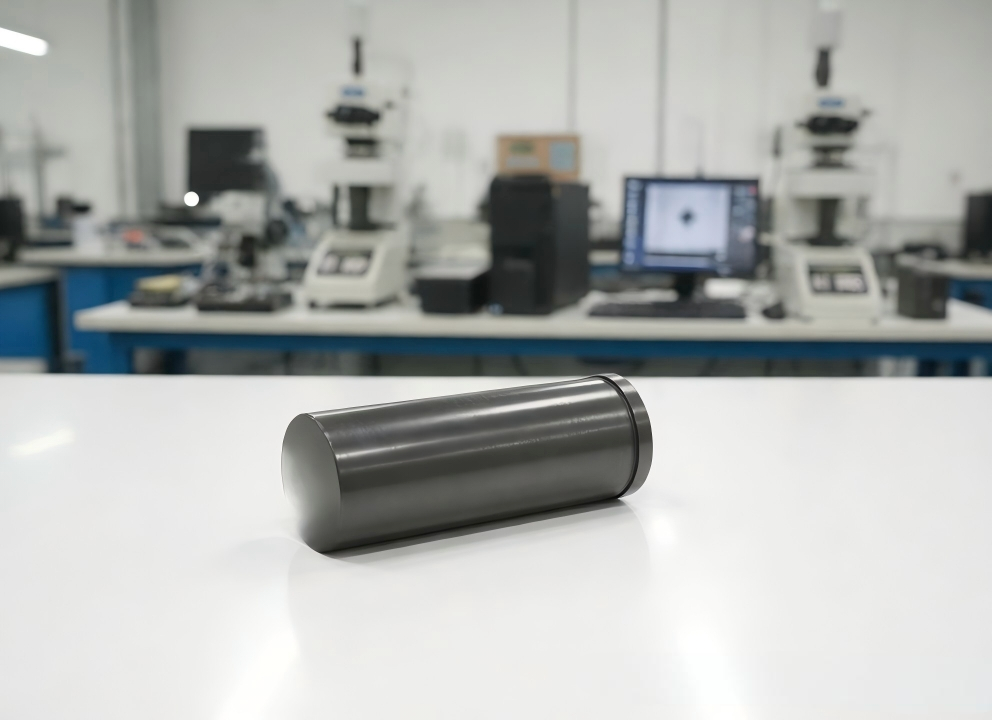
In PERC/TOPCon solar cell sintering lines and 12-inch semiconductor diffusion furnaces, the furnace tube may look like just a chamber component, but it directly governs doping uniformity, wafer breakage rate, and how often you stop the line to swap tubes. As downstream capacity expanded rapidly over the past two years, quartz’s old problems—softening and sagging above 1300°C, devitrification, particle shedding—got amplified. Production lines began seriously evaluating silicon carbide ceramic tubes as an alternative. By breaking down the technical specs, scenario fit, and market landscape, the selection logic becomes much clearer.

I. Start with the “Three-Stream Split” in Technical Specs, Then Talk Numbers
Silicon carbide furnace tubes are not a single product. By sintering process they split into three lines—reaction-bonded (SiSiC), recrystallized (Re-SiC), and pressureless sintered (SSiC)—with quite different positioning.
- SiSiC: Silicon-carbon reaction sintering, contains a small amount of free silicon, cost-effective, can form complex shapes. But the free silicon fails first in strongly oxidizing/corrosive environments. Suited to rare-earth sintering, mid-range ceramic kilns—medium-low temperature scenarios where ultimate cleanliness isn’t required.
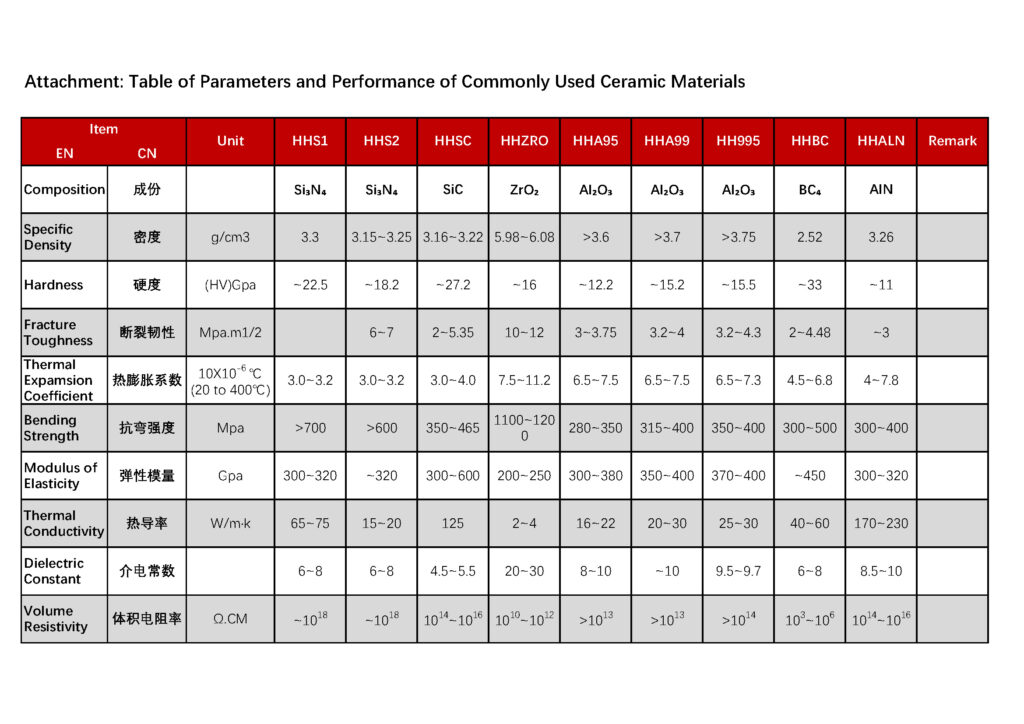
- Recrystallized SiC (Re-SiC): Withstands 1380°C long-term in air, short peaks to 1600°C. In metallurgical annealing furnace radiant tube positions, service life reaches over 3× nickel-based alloys; in SO₂ flue gas, corrosion depth after 8000 hours is only 0.1 mm.
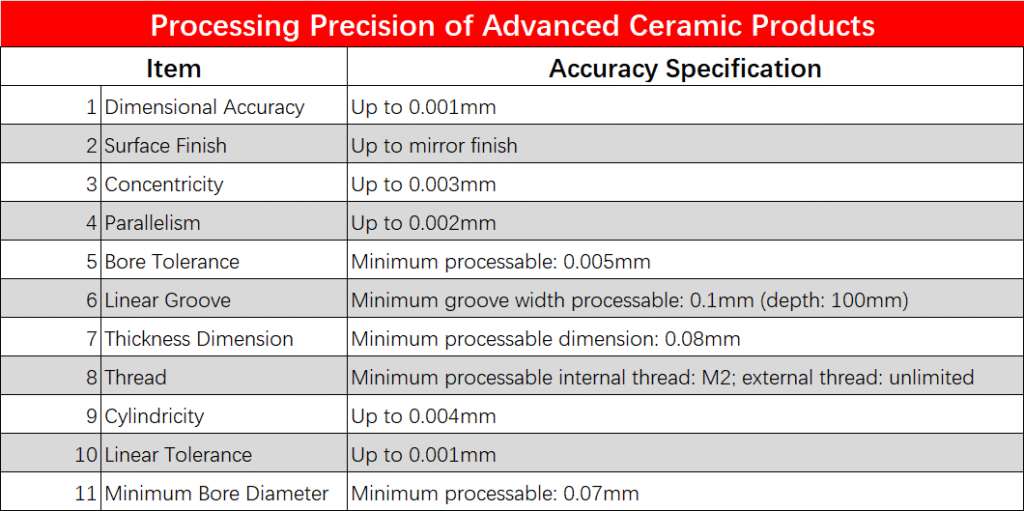
- Pressureless Sintered SSiC: The high-end grade. Purity ≥98%, density >3.1 g/cm³, flexural strength >400 MPa, thermal conductivity above 110 W/(m·K), dimensional stability maintained even at 1550°C. Semiconductor-grade versions add a CVD coating to suppress surface impurities below 5 ppm, base material impurities generally controlled under 300 ppm, straightness ≤0.1 mm/m—if these numbers don’t hold, the wafer doping gate essentially can’t be passed.
Shenzhen Xinluo Technology Co., Ltd. also runs the pressureless sintering + CVD route, customizing inner diameters of 50–300 mm and lengths of 1–4 m to furnace type, with flange interfaces following the equipment.
II. The Logic of Scenario Locking: Not Every Furnace Deserves a SiC Swap
To be frank, quartz tubes remain the optimal solution for short-batch work below 1100°C. Switching to SiC costs significantly more—run the numbers before moving.
On the PV side the case is clear: using high-performance SiC tubes in PERC/TOPCon sintering sections lifts cell conversion efficiency by 0.3%–0.5%, improves overall line yield by 2%–3%, and the incremental annual output value per line in the tens-of-millions range is real. In 12-inch semiconductor diffusion furnaces there’s barely a choice—radial temperature difference must be compressed to ±3°C (industry average ±5°C), and SSiC + coating is almost mandatory. For sub-5 nm processes, doping uniformity (UI%) controlled within 3% simply can’t be done with quartz.
The downsides must also be laid out: SSiC unit price is 5–8× quartz, lead times are long, and brittle materials need impact protection during installation. SiSiC contains free silicon, which precipitates out in strongly oxidizing + high-humidity diffusion fronts—so it cannot be forced onto high-end lines. For selection, first check the three-tier threshold of process temperature, medium, and cleanliness, then work backward to the material. That’s more reliable than staring at the parameter sheet the other way around.
III. Market Landscape and Domestic Positioning
Two sets of figures for comparison: the global SiC furnace tube market in 2025 is about $146.5 million, projected to $200.3 million by 2032, CAGR 4.5%; another estimate puts 2024 at ~RMB 1.01 billion and 2031 at RMB 1.32 billion. The absolute value isn’t explosive, but China’s growth rate is clearly above the global average—driven by dual pull from N-type PV capacity expansion and SiC power device lines.
The structure is a typical bipolar: high-end diffusion tubes held by CoorsTek, Saint-Gobain and a few foreign players; the mid-high-end domestic substitution window is open, competing on sintering density, coating uniformity, and response speed. Domestic makers like Haihe that do pressureless sintering start by stabilizing wall thickness uniformity (±0.1 mm), roundness (≤0.5 mm), and post-CVD surface roughness (Ra ≤0.2 μm), then stack customization and lead time on top—that’s how the import-substitution road gets walked.
In precision high-temperature processes, the furnace tube was never just a “consumable.” It’s a yield variable. In conditions quartz can’t survive, SiC swaps in for stop frequency, breakage rate, and doping consistency. The accounting must be done for the whole line, not per-meter quote. The window domestic capacity expansion gives us is roughly 3–5 more years. Makers who nail batch stability on the material side won’t just eat the furnace tube market later—they’ll also capture the derivative plate of boats, rollers, and seals.
About Xinluo Ceramic:
Shenzhen Xinluo Technology Co., Ltd. (Xinluo) specialises in researching and developing all kinds of ceramic components, including Zirconia, Alumina, AlN, SiC, Si3N4 and mixed powder, as well as manufacturing. With an extensive selection of advanced ceramic materials and precision machining capabilities, we can deliver customised components with speed and accuracy. Depending on the application, Xinluo can help provide solutions for different materials.
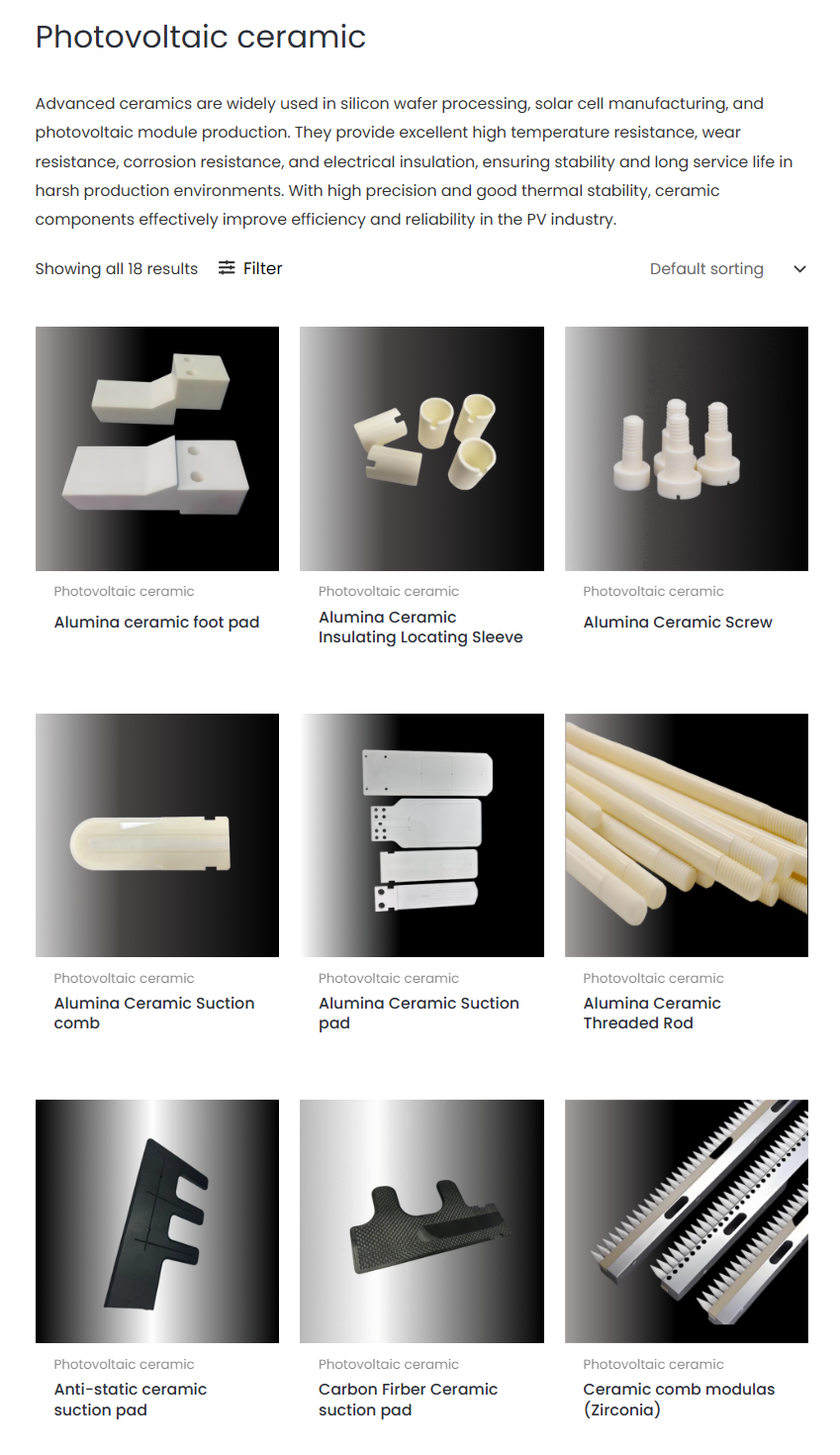

Photovoltaic Ceramics Products Information: https://xinluoceramic.com/product-category/photovoltaic/

Advanced Ceramics Materials Information: https://xinluoceramic.com/product-tag/material/
