
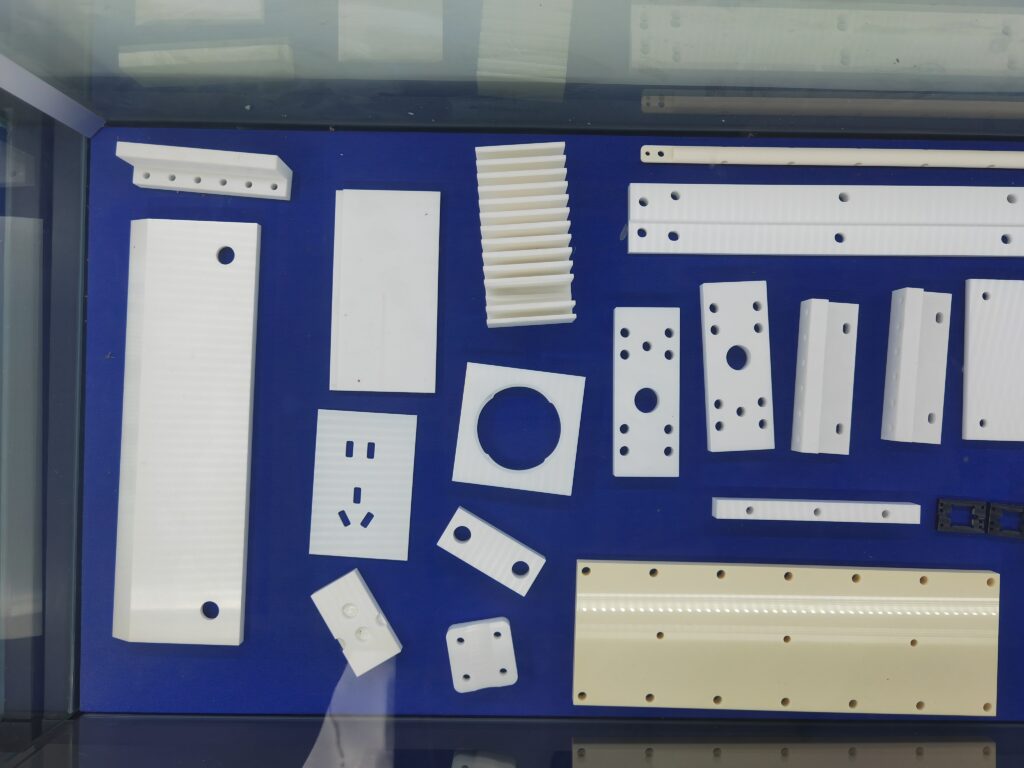
Advanced ceramic fixtures play an important role in the high-temperature operation of SOFC
From Data Center On-Site Power to Commercial & Industrial Distributed Energy: The Expanding Applications of Solid Oxide Fuel Cells (SOFC). Solid oxide fuel cells (SOFC) are expanding into more applications—from on-site power supply at data centres to commercial and industrial distributed energy. As the industry moves toward scaled deployment, the critical components embedded in stacks, their manufacturing, and testing processes face ever-higher reliability requirements. Ceramic fixtures are one such component.
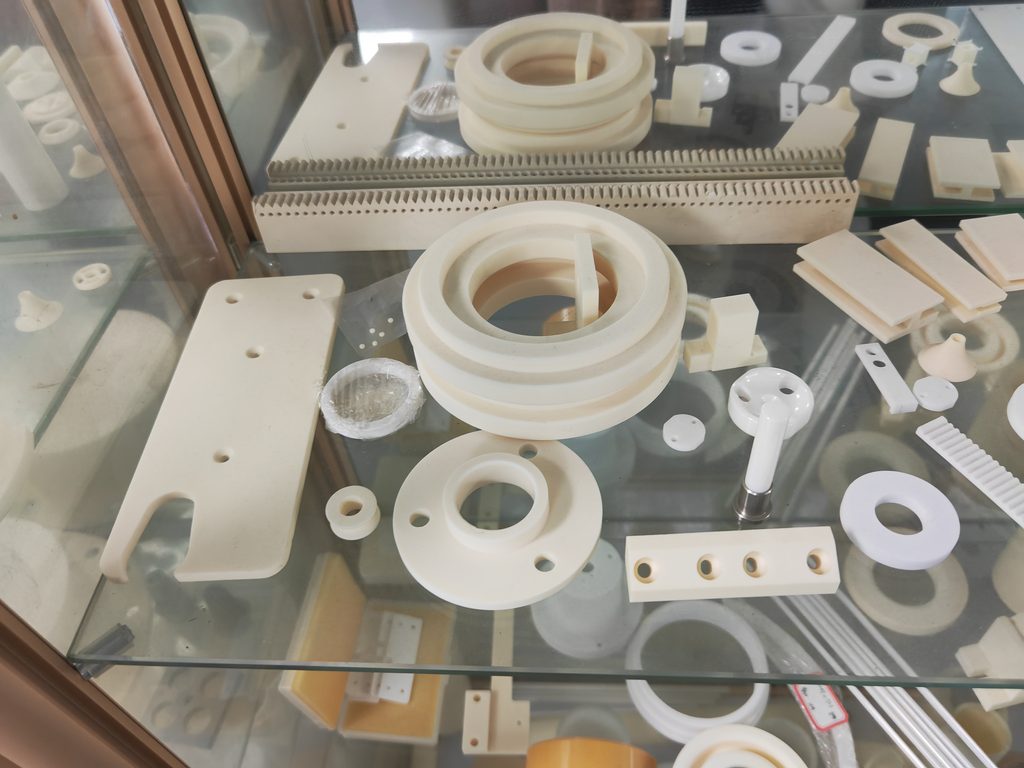
I. Behind the AI Computing Boom, Another “Power Competition” Unfolds
The rapid expansion of AI computing is driving up data centre electricity demand. When grid expansion and interconnection timelines in certain regions struggle to keep pace with data center construction speeds, distributed energy solutions deployable on-site are attracting growing attention. SOFC stands out as one representative technology pathway. By converting the chemical energy of fuel directly into electricity through high-temperature electrochemical reactions, SOFC offers high efficiency, modularity, and fuel flexibility, making it suitable for scenarios such as data centers and commercial/industrial distributed power generation.
As downstream demand grows, SOFC is progressing from R&D validation toward scaled manufacturing. Industry focus is expanding from “how to achieve efficient power generation” to how stacks and related components can operate stably over the long term under high-temperature conditions. This brings renewed importance to ceramic substrates, electrodes, interconnects, sealing components, and structural parts such as ceramic fixtures.
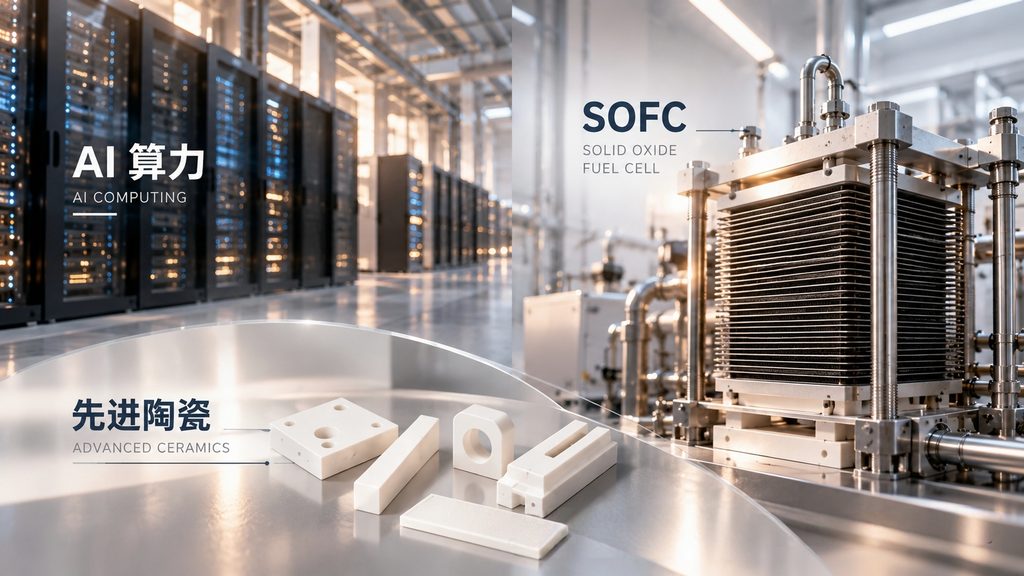
II. Why Choose Advanced Ceramics Under Hundreds of Degrees Celsius?
SOFC must operate at hundreds of degrees Celsius in complex atmospheres, imposing special requirements on fixtures and related structural components. Traditional metallic materials, under prolonged high-temperature exposure in oxidizing and reducing atmospheres, may face oxidation, material stability issues, and risks of impurity introduction. Where electrical isolation is required, additional insulation considerations come into play. Advanced ceramics, by contrast, combine high-temperature resistance, electrical insulation, and excellent chemical stability, maintaining relatively stable performance in high-temperature environments while reducing risks associated with metal oxidation and impurity introduction that could interfere with cell manufacturing and testing. This is the key value of ceramic fixtures in SOFC applications—they address not merely “how to fix components at high temperatures,” but also balance insulation, stability, and cleanliness.
Among advanced ceramics, alumina—with its excellent high-temperature resistance, electrical insulation, high hardness, and chemical stability—is a common material choice for SOFC ceramic fixtures and related structural components. For structural positions demanding higher mechanical stress resistance, toughness, and crack resistance, composite ceramics such as zirconia-toughened alumina (ZTA) can be selected based on actual requirements. Therefore, the ceramic materials needed for different structural positions are not identical; selection must consider operating temperature, loading mode, structural geometry, and assembly requirements holistically.
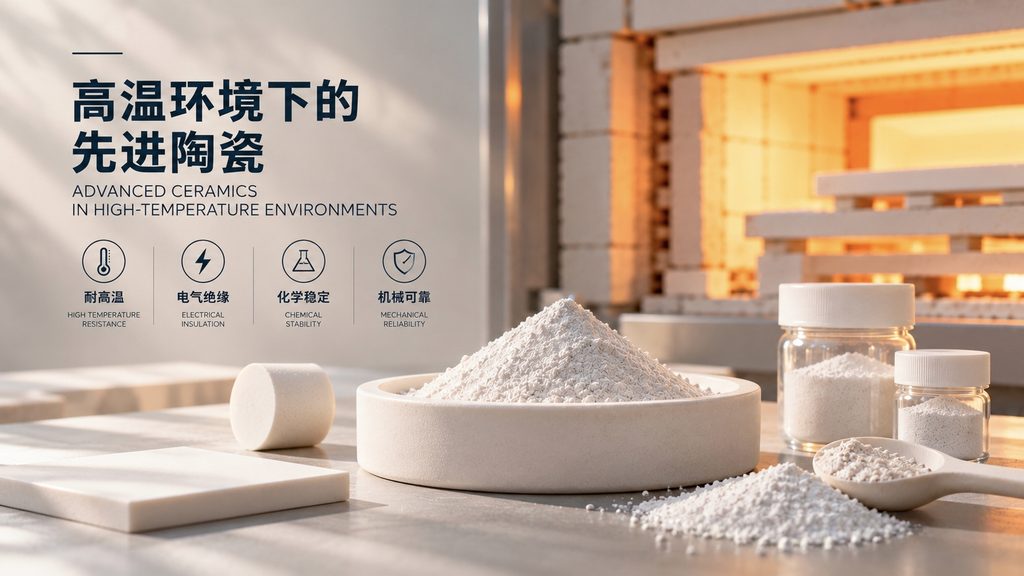
III. What Exactly Do Ceramic Fixtures Inside an SOFC Stack Do?
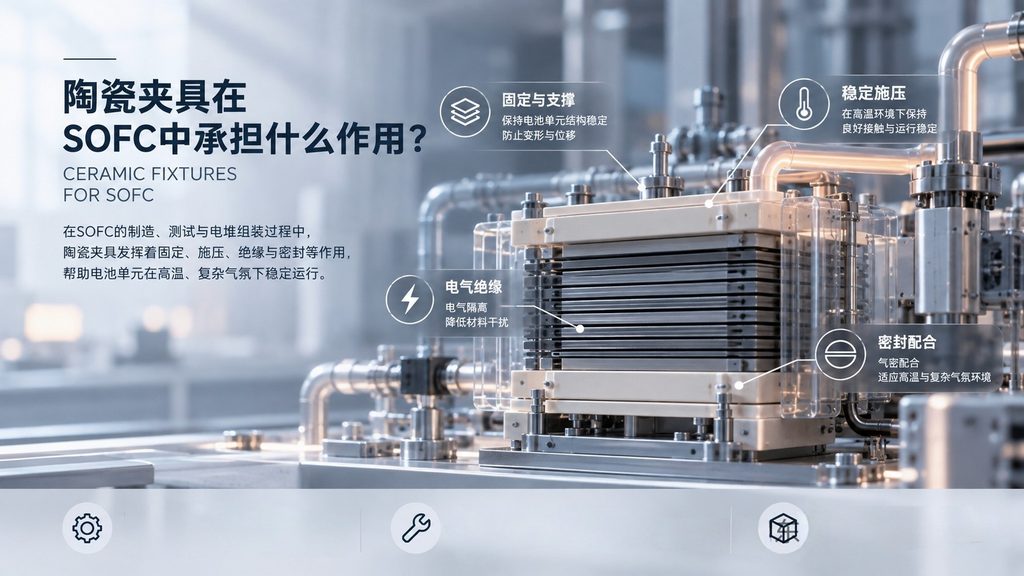
SOFC ceramic fixtures are primarily used in cell manufacturing, performance testing, and stack assembly, serving functions such as fixation, support, pressure application, insulation, and sealing cooperation. Depending on the application stage, their use can be divided into two main categories.
Manufacturing Process: Fixation and Support During High-Temperature Firing
SOFC cells undergo high-temperature firing during manufacturing. As temperature changes and the material itself shrinks, cells may warp, deform, or even adhere to adjacent components. High-temperature-resistant ceramic fixtures can provide fixation, support, and isolation during this process, helping cells maintain the required geometry and position. For fixtures that enter the high-temperature fabrication environment directly, ceramic materials such as high-purity alumina can also minimize impurity introduction, reducing the risk of interference with cell materials.
Testing and Stack Assembly: Stable Pressure Application and Sealing Coordination
During single-cell testing or stack assembly, ceramic fixtures must position the cell and related components, apply and maintain appropriate clamping force to ensure stable fit among components. Simultaneously, fixtures must coordinate with sealing structures to maintain the gas-tight environment required for testing and operation. Some test fixtures also integrate gas flow channels, as well as interfaces for current, voltage, and temperature monitoring, to meet test system functional requirements.
In a working environment of hundreds of degrees Celsius, the fixture itself must also withstand the challenges of temperature variations. An all-ceramic structure can reduce the effects of metal oxidation and impurity introduction at high temperatures. Thermal expansion matching between different components, combined with appropriate pressure compensation structures, helps maintain a relatively stable clamping state even during temperature ramping. Thus, all-ceramic construction, thermal expansion matching with pressure compensation, functional integration, and precision sealing constitute several key characteristics enabling SOFC ceramic fixtures to adapt to high-temperature environments.
From fixation and support during manufacturing to pressure application, insulation, and sealing during testing and assembly, the core problem that ceramic fixtures solve is always how to maintain stable positioning, loading, and working conditions for the cell under high temperatures and complex atmospheres.
These requirements ultimately translate into demands on ceramic structure, machining precision, and assembly fit, presenting greater challenges for the manufacturing of advanced ceramic components.
IV. From Material to Validation: Making Advanced Ceramics True “Engineering Components”
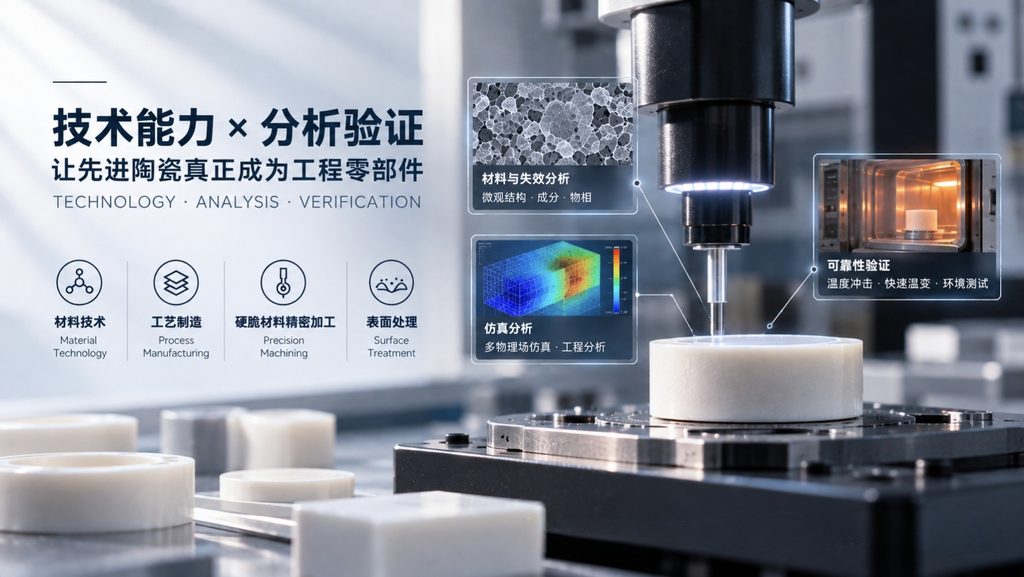
For high-temperature precision structural parts such as SOFC ceramic fixtures, the real challenge lies in translating material properties into structures that can be manufactured, assembled, and validated. From material systems, forming, and sintering, to precision machining of holes, grooves, steps, and irregular contours—each stage affects final dimensions and assembly outcomes. Particularly for advanced ceramics with high hardness and brittleness, complex structure machining and batch consistency control place higher demands on manufacturing processes.
✅ Around the development and manufacturing of advanced ceramic structural parts, Xinluo continuously accumulates capabilities in material development, process manufacturing, hard-brittle material precision machining, and surface treatment, integrating R&D analysis, simulation, and reliability verification throughout. On the R&D and inspection side, the company is equipped with field emission scanning electron microscopy, X-ray inspection equipment, ultrasonic microscopy, simultaneous thermal analyzers, X-ray diffraction (XRD), and laser particle size analyzers. It possesses reliability testing conditions for thermal shock, rapid temperature cycling, and high/low-temperature stress, enabling analysis and evaluation of material microstructure, phases, process performance, and reliability.
✅ Combining simulation analysis with pilot-scale process platforms, as well as ceramic forming, sintering, and precision machining capabilities, Xinluo continuously refines its R&D and manufacturing chain—from material research and process realization to machining and validation—providing a foundation for the development and manufacturing of complex advanced ceramic structural parts.
As SOFC gradually moves toward scaled application, requirements for material, structure, and manufacturing consistency will further intensify. When high temperature, complex atmospheres, and precision assembly converge, what advanced ceramics provide is no longer merely material properties, but an engineering capability that supports stable system operation.
✅ Oriented toward SOFC and broader new energy equipment applications, Xinluo will continue to build upon its capabilities in advanced ceramic materials, precision manufacturing, and inspection/validation, advancing the application of advanced ceramics in more high-temperature, insulation, and complex-structure scenarios.
Xinluo Advanced Ceramics:
Discover how alumina ceramic fixtures support SOFC manufacturing, high-temperature firing, cell testing, and stack assembly. Explore precision ceramic components and custom manufacturing solutions from Xinluo Technology.
🌏 For more product information, please click the link below to read:
What are SOFC ceramic fixtures?
SOFC ceramic fixtures are precision ceramic components used to support, position, separate, or clamp solid oxide fuel cell components during manufacturing, high-temperature firing, testing, and stack assembly. Depending on the process requirements, alumina ceramic may be selected for its high-temperature stability, electrical insulation, hardness, and chemical stability. The appropriate material and fixture design depend on operating temperature, atmosphere, mechanical loading, dimensional requirements, and assembly conditions.
1. SOFC Technology and Ceramic Applications
- What are solid oxide fuel cells (SOFCs)?
- What are ceramic fixtures used for in SOFC manufacturing?
- Why are advanced ceramics used in solid oxide fuel cells?
- What types of ceramic components are used in SOFC stacks?
- How do ceramic fixtures support SOFC manufacturing?
- Why are high-temperature ceramic components important for fuel cells?
- What are the applications of precision ceramics in fuel cell manufacturing?
- How do ceramic fixtures help maintain dimensional stability during high-temperature firing?
2. Selection of High-Temperature Ceramic Materials
- Why is alumina used for SOFC ceramic fixtures?
- What properties make alumina suitable for high-temperature fixtures?
- Which ceramic materials are suitable for high-temperature electrical insulation?
- How do advanced ceramics perform in oxidizing and reducing atmospheres?
- What are the benefits of high-purity alumina ceramic components?
- When should zirconia-toughened alumina (ZTA) be considered?
- What factors affect ceramic material selection for SOFC applications?
- How do ceramic fixtures help reduce the risk of metallic contamination during high-temperature processing?
3. Functions of Ceramic Tooling for SOFCs
- What functions do ceramic fixtures perform in SOFC manufacturing?
- How are ceramic fixtures used during SOFC cell firing?
- Why is dimensional stability important for SOFC ceramic fixtures?
- How do ceramic fixtures help prevent cell deformation during firing?
- What are the requirements for ceramic fixtures used in SOFC testing?
- Why is electrical insulation important in SOFC test fixtures?
- How do ceramic fixtures support stable clamping during fuel cell stack assembly?
- What should be considered when designing ceramic fixtures for SOFC stacks?
4. Custom Ceramic Industrial Components and Manufacturer Search
- Who manufactures custom ceramic fixtures for SOFC applications?
- Where can I source high-temperature alumina ceramic fixtures?
- Which manufacturers provide custom precision ceramic components for fuel cells?
- Can SOFC ceramic fixtures be manufactured according to engineering drawings?
- What information is needed to customize ceramic fixtures for fuel cell manufacturing?
- How do manufacturers control dimensional tolerances in ceramic fixtures?
- What manufacturing processes are used for high-temperature ceramic fixtures?
- How do I choose a precision ceramic manufacturer for SOFC applications?
- Can alumina ceramic fixtures be customized for different SOFC manufacturing processes?
- What factors affect the service life of high-temperature ceramic fixtures?
Keywords:
#SOFC Ceramic Fixtures #Ceramic Fixtures for SOFC Manufacturing #Alumina Ceramic Fixtures
#Ceramic fixtures for solid oxide fuel cells #SOFC manufacturing fixtures #SOFC testing fixtures
#SOFC stack ceramic components #Ceramic components for SOFC stacks #Ceramic support fixtures for fuel cells
#High temperature fixtures for SOFC manufacturing #Precision ceramic fixtures for fuel cell testing
#Custom ceramic fixtures for fuel cells #Ceramic positioning fixtures for SOFC cells
# High-temperature ceramic fixtures # High-temperature resistant ceramic components
#High purity alumina ceramic components #High temperature alumina ceramic fixtures
#Electrically insulating ceramic fixtures #High temperature electrical insulation ceramics
#Chemically stable ceramic components #Wear resistant precision ceramic components
# High-temperature ceramic support components #Ceramic fixtures for high-temperature processing
#Alumina ceramic components for SOFC #Alumina ceramic fixtures for fuel cells
#High purity alumina ceramic fixtures #High purity alumina ceramic fixtures
#High purity alumina ceramic fixtures #Advanced alumina ceramics #Zirconia-toughened alumina (ZTA) components
#ZTA ceramic components #Toughened alumina ceramic components #Advanced ceramic materials for fuel cells
#Custom alumina ceramic components #Precision alumina ceramic manufacturing
#SOFC cell manufacturing fixtures #Ceramic fixtures for high temperature firing #Ceramic supports for SOFC cell firing
#Ceramic fixtures for fuel cell testing #SOFC stack assembly fixtures #Ceramic clamping fixtures for fuel cell stacks
#Ceramic fixtures for high temperature testing #Precision ceramic positioning components
#Ceramic support components for cell assembly #Ceramic fixtures for fuel cell production
#SOFC ceramic fixtures manufacturer #Custom SOFC ceramic fixtures
#High temperature ceramic fixtures manufacturer
#Alumina ceramic fixtures supplier #Custom alumina ceramic components manufacturer
#Precision ceramic components manufacturer #Advanced ceramics manufacturer
#Custom precision ceramic machining #Ceramic components for fuel cell manufacturers
#High purity alumina ceramic components supplier #Ceramic fixtures made to drawings
#Custom ceramic manufacturing for fuel cell applications
